 |
 |
 |
Rhenium Alloy
Specimen Preparation (Class 2 Procedures)
 |
 |
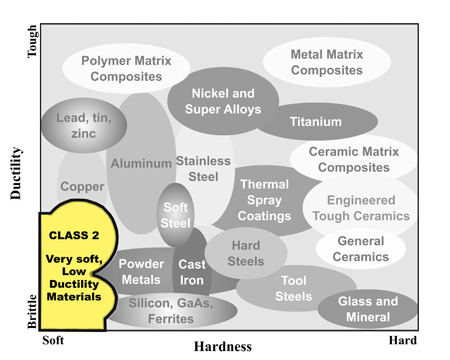
Refractory metals such as Rhenium, Niobium, Tungsten and Molybdenum are a very soft, and any loose or fracture abrasive particles can easily embed. This makes specimen preparation very difficult because it gums up diamond grinding disks or becomes embedded with fractured SiC particles when ground with SiC papers. The key to preparation of this material is to use the tougher alumina abrasive and to chemically etch the specimen between each grinding step. The purpose of etching is to remove the embedded particles and not carry them over as contamination.
SECTIONING
MAXCUT Abrasive blade (Cat. No. MAX-C or MAX-I series)
MOUNTING
Compression Mounting with Phenolic, Epoxy or Diallyl Phthalate compression mounting resins
POLISHING
| Abrasive/surface | Lubricant | Force/ sample | Speed (Head/base) |
Time | Individual Force mode |
Central Force mode |
|---|---|---|---|---|---|---|
| P120 grit ALO paper* P220 grit ALO paper* |
Water | 5-10 lbs | 100/100 rpm | Planar 1 min |
 |
|
| P500 grit ALO paper P1200 grit ALO paper |
Water | 5-10 lbs | 100/100 rpm | 1 min 1 min |
 |
|
| 1 um DIAMAT diamond on ATLANTIS polishing pad |
Water | 5-10 lbs | 100/100 rpm | 2 min | |
|
| 0.05 um acidic Nanometer acid alumina on a BLACKCHEM 2 pad |
Polishing with 10% Rhenium - 30 ml |
5-10 lbs | 100/100 rpm | 1 min | |
|
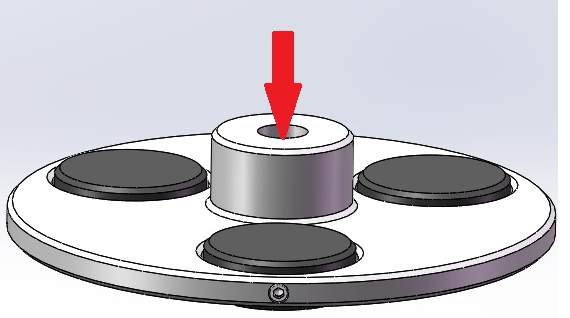
*Required for central polishing force. Click here for more information on central vs. individual polishing force polishing.
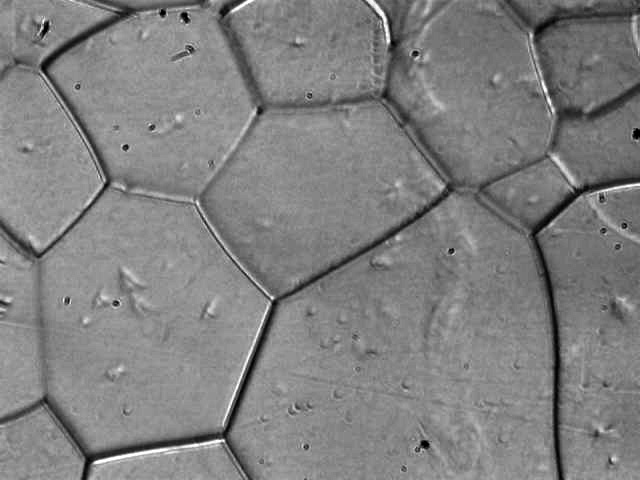 |
| Rhenium (BF), etched |
ETCHING
Common Etchants

CAUTION:Safety is very important when etching. Be sure to wear the appropriate protective clothing and observe all WARNINGS on chemical manufacuters SDS (Safety Data Sheets). Also review the COMMENTS and CONDITIONS Section for each etchant.
Copyright 2006-2022
PACE TECHNOLOGIES® -
3601 E. 34th St., Tucson, AZ 85713,
USA
Telephone +1-520-882-6598 FAX +1-520-882-6599
All Rights Reserved