High Carbon & Heat Treated Steel Etchants
Guide to etching high carbon, heat treated, and martensitic steels. Covers Picral, Modified Picral, and Nital for revealing martensite, pearlite, bainite, and prior austenite grain boundaries.
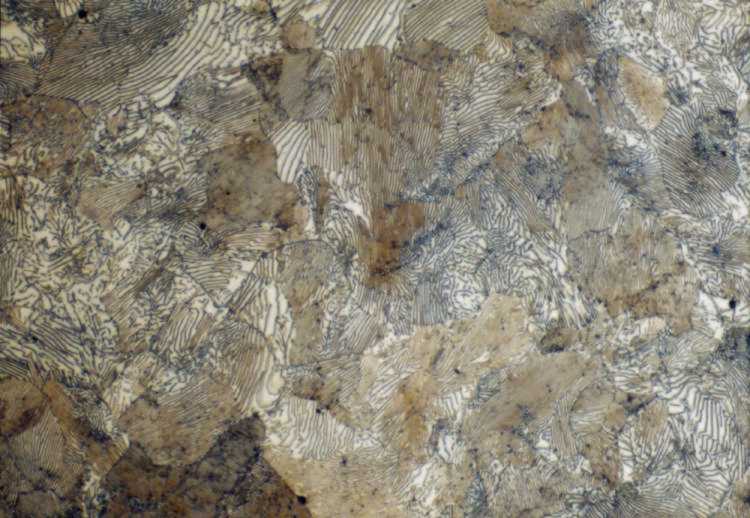
Classification & Preparation
High carbon steels (0.60–1.00% C) and tool steels are used where high hardness and wear resistance are required.
Steel Classification
High carbon and tool steel designations by application.
View classifications
- AISI 1060–1095 — Plain high carbon steels
- W, O, A, D series — Tool steels for cutting and forming
- S, H series — Shock-resisting and hot-work steels
- M, T series — High-speed steels
- 52100 — Bearing steel (high carbon chromium)
Heat Treatment Microstructures
Different heat treatments produce distinct microstructural features.
View conditions
- Annealed — Pearlite + ferrite – Softest condition
- Normalized — Fine pearlite – Moderate hardness
- Quenched — Martensite – Maximum hardness
- Quenched & tempered — Tempered martensite – Balanced properties
- Austempered — Bainite – Strength + ductility
- Spheroidized — Globular cementite – Maximum ductility
Preparation Tips
Hardened steels are prone to grinding burn and tempering artifacts.
View key considerations
- Use low-speed precision cutting to avoid altering heat-treated microstructure
- Light pressure and adequate coolant during grinding
- SiC papers or diamond grinding disks effective
- Final polishing with 0.05 µm alumina or colloidal silica
- Clean and dry thoroughly before etching
Recommended Etchants
Picral preferentially etches cementite and martensite; Nital reveals ferrite boundaries. For more options, visit the Etchant Database.
| Etchant | Composition | Conditions | Applications |
|---|---|---|---|
| Picral |
|
|
|
| Modified Picral |
|
|
|
| Nital |
|
|
|
Troubleshooting
Common etching issues and how to resolve them.
Over-etching
Surface too dark or grainy. Reduce time by 50% and monitor. Picral is less prone to over-etching than Nital.
Under-etching
Features not clearly visible. Increase time by 15–30 seconds or ensure etchant is fresh. Picral may need slightly longer for hardened steels.
Uneven Etching
Ensure sample is dry before etching with consistent immersion motion. Check surface is free of residual scratches.
Staining
Rinse immediately with water and dry with compressed air or alcohol to prevent oxidation.
Poor Phase Contrast
Switch between Nital and Picral—Picral etches cementite/martensite, Nital reveals ferrite boundaries. Adjust concentration as needed.
Grinding Burn Artifacts
Unusual dark or light bands parallel to surface indicate grinding damage. Re-prepare with lighter pressure and more coolant.
Related Resources
Hardened Steel Prep Guide
Step-by-step preparation for high carbon and heat treated steels.
View guideEtchant Selector Tool
Find the right etchant for any material.
Open toolEtchant Database
Searchable database of metallographic etchants.
Browse databaseMaterials Database
Look up procedures and properties for hundreds of materials.
Explore materials