
PENTA Series Hand & Belt Grinders
The PENTA Series features hand grinders with silicon carbide rolls for precision material removal. Perfect for use with lapping films and achieving fine surface finishes.
PACE Technologies' lapping films are engineered for high-precision polishing and microfinishing in metallographic sample preparation. These precision-coated abrasives produce extremely flat surfaces across diverse materials, making them ideal for semiconductor dies, fiber optics, optical components, ceramic capacitors, and hard drive read-write heads.
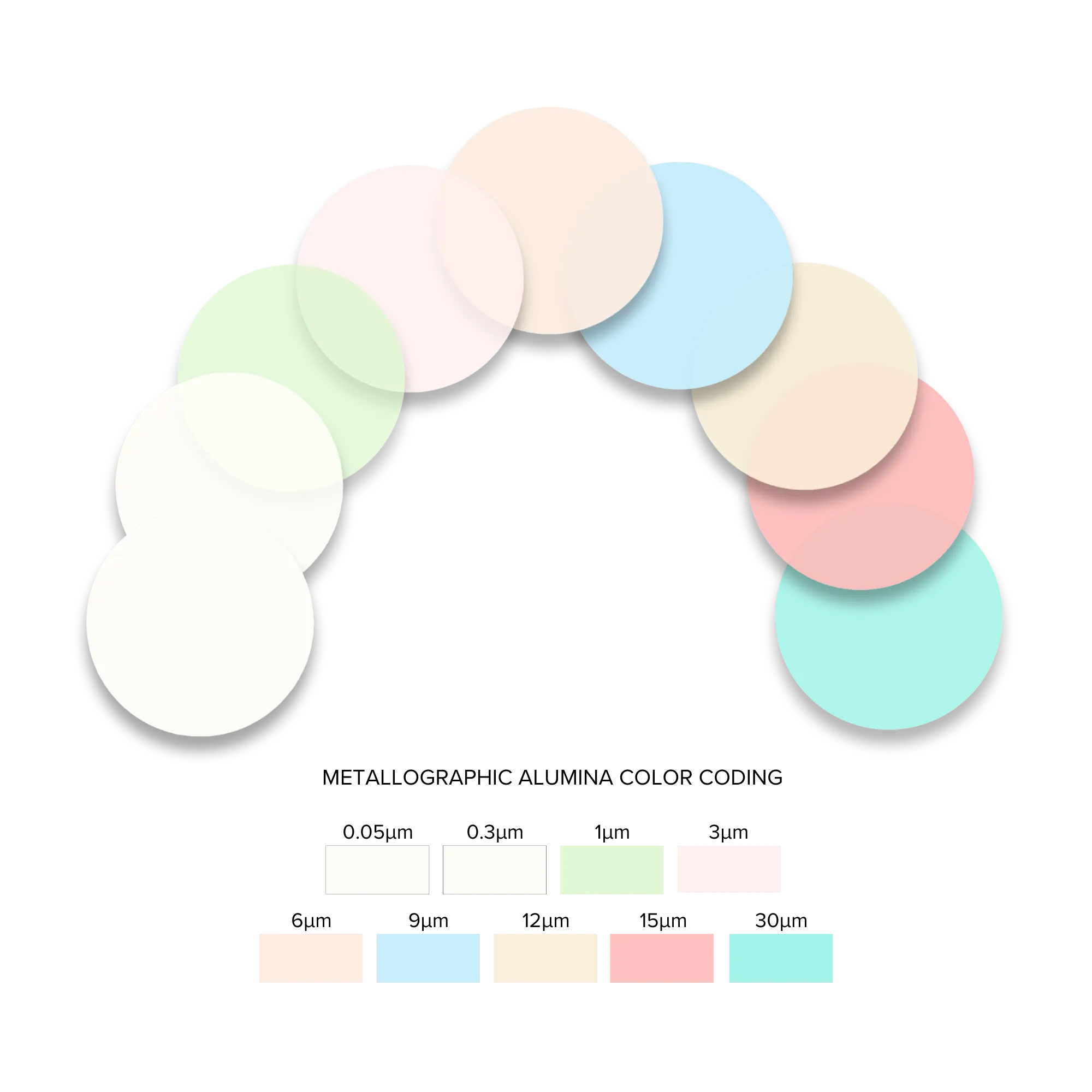
Use alumina for intermediate steps and softer materials; diamond films for harder, brittle, or high-precision applications requiring superior flatness.
Even, light pressure enhances uniformity and prevents localized wear, ensuring consistent surface finishes across the entire sample.
Clean substrates and film before use to maximize performance and avoid scratching that can compromise sample quality.
Lapping films are precision-coated abrasives that produce extremely flat surfaces across diverse materials. They're ideal for semiconductor dies, fiber optics, ceramic capacitors, optical components, and hard drive read-write heads.
These films feature a durable polyester backing (typically 3 mils) with abrasives fixed using an epoxy or adhesive binder. The uniform abrasive distribution ensures consistent surface finishes, even across varying material hardnesses.
Follow these procedures to achieve optimal results with lapping films. The process varies slightly depending on backing type and application requirements.
Typical process parameters for lapping films:
| Description | Size (inches) | Catalog Number (Plain-backed) | Catalog Number (PSA backed) | Color Code |
|---|---|---|---|---|
| 0.10 um Diamond Lapping Film | Up to 12-inches | DA-01 | DAA-01 | 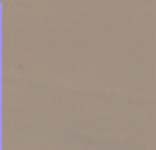 |
| 0.25 um Diamond Lapping Film | Up to 12-inches | DA-025 | DAA-025 |  |
| 0.50 um Diamond Lapping Film | Up to 12-inches | DA-052 | DAA-05 | |
| 1 um Diamond Lapping Film | Up to 12-inches | DA-1 | DAA-1 | 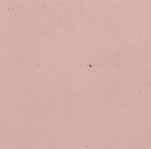 |
| 3 um Diamond Lapping Film | Up to 12-inches | DA-3 | DAA-3 | 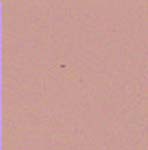 |
| 6 um Diamond Lapping Film | Up to 12-inches | DA-6 | DAA-6 |  |
| 9 um Diamond Lapping Film | Up to 12-inches | DA-9 | DAA-9 |  |
| 15 um Diamond Lapping Film | Up to 12-inches | DA-15 | DAA-15 |  |
| 30 um Diamond Lapping Film | Up to 12-inches | DA-30 | DAA-30 |  |
| Description | Quantity (oz) | Catalog Number |
|---|---|---|
| 32 oz Diamond Lapping Film Lube | 32 | LFL-032 |
| 1 gallon Diamond Lapping Film Lube | 128 | LFL-128 |
| Description | Size (inches) | Catalog Number (Plain-backed) | Catalog Number (PSA backed) |
|---|---|---|---|
| 1.0 um silicon carbide | Up to 12-inches | SIC-001PB-3 | SIC-001PSA-3 |
| 3.0 um silicon carbide | Up to 12-inches | SIC-003PB-3 | SIC-003PSA-3 |
| 5.0 um silicon carbide | Up to 12-inches | SIC-005PB-3 | SIC-005PSA-3 |
| 9.0 um silicon carbide | Up to 12-inches | SIC-009PB-3 | SIC-009PSA-3 |
| 12 um silicon carbide | Up to 12-inches | SIC-012PB-3 | SIC-012PSA-3 |
| 20 um silicon carbide | Up to 12-inches | SIC-020PB-3 | SIC-020PSA-3 |
| 30 um silicon carbide | Up to 12-inches | SIC-030PB-3 | SIC-030PSA-3 |
| Description | Size (inches) | Catalog Number (Plain-backed) | Catalog Number (PSA backed) | Color Code |
|---|---|---|---|---|
| 0.05 um alumina (ALO) | Up to 12-inches | ALO-105PB-3 | ALO-105PSA-3 |  |
| 0.30 um alumina | Up to 12-inches | AL-103PB-3 | AL-103PSA-3 | |
| 1.0 um alumina | Up to 12-inches | AL-001PB-3 | AL-001PSA-3 |  |
| 3.0 um alumina | Up to 12-inches | AL-003PB-3 | AL-003PSA-3 |  |
| 5.0 um alumina | Up to 12-inches | AL-005PB-3 | AL-005PSA-3 |  |
| 9.0 um alumina | Up to 12-inches | AL-009PB-3 | AL-009PSA-3 |  |
| 12 um alumina | Up to 12-inches | AL-012PB-3 | AL-012PSA-3 |  |
| 15 um alumina | Up to 12-inches | AL-015PB-3 | AL-015SA-3 |  |
| 30 um alumina | Up to 12-inches | AL-030PB-3 | AL-030PSA-3 |  |
| Symptom | Cause | Action |
|---|---|---|
| Coarse scratching | -Swarf build-up on the lapping film | -Use a lubricant with an appropriate surfactant |
| Tearing of pad | -Sharp specimen edges | -Reduce intitial applied load so that the specimen edge does not cut the film. Gradually increase pressure during the lapping operation. -Dispense lubricant more frequently |
| Excessive relief or edge rounding | -PSA backing providing too much flexibility (resiliency) -Lapping backing plate surface is not flat |
-Use a plain backed diamond lapping film -Use a flat lapping surface |
The PENTA Series features hand grinders with silicon carbide rolls for precision material removal. Perfect for use with lapping films and achieving fine surface finishes.

Complete automated grinding and polishing workflow with precise control for lapping film applications and final finishing steps.
Common questions about lapping films
Diamond lapping films provide the finest finish and are ideal for hard materials requiring minimal subsurface damage. Silicon carbide (SiC) films are cost-effective and suitable for most materials, offering good cutting action. Alumina films are gentler and recommended for softer materials or final polishing steps. Choose based on material hardness, desired finish quality, and cost considerations.
Plain-backed films require a backing plate with water to hold them in place, offering more flexibility and easier cleanup. PSA (pressure-sensitive adhesive) backed films adhere directly to the polishing surface, providing stable positioning and preventing movement during polishing. PSA films are more convenient but generate more waste. Choose plain-backed for frequent film changes and PSA for consistency and ease of use.
Start with the finest grit that achieves adequate material removal (typically 15-30 µm), then progress through finer grits (9 µm → 6 µm → 3 µm → 1 µm → 0.5 µm). Don't skip grit sizes, as this can leave scratches that are difficult to remove. For precision work, each step should remove damage from the previous step while introducing finer, more uniform scratches.
Film tearing typically results from excessive pressure, insufficient lubrication, or debris on the polishing surface. To prevent tearing: 1) Use light, consistent pressure (2-5 lbs per specimen), 2) Ensure adequate water or lubricant flow, 3) Clean the backing plate thoroughly before applying new film, 4) Inspect specimens for sharp edges that can catch the film, and 5) Replace worn films promptly before they tear.
Lubrication is essential for lapping films. Water is the most common lubricant, providing cooling, swarf removal, and film protection. Using films dry will cause rapid film degradation, excessive heat generation, specimen damage, and poor surface finish. Always use adequate lubrication, typically water for most applications, though some materials may require specialized lubricants to prevent corrosion or chemical reactions.
Replace lapping films when you notice: 1) Reduced cutting efficiency requiring longer polishing times, 2) Visible wear patterns or bald spots on the film surface, 3) Inconsistent scratch patterns on specimens, 4) The film becoming discolored or loaded with swarf that won't rinse away, or 5) Any tears or delamination. Regular replacement ensures consistent results and prevents specimen damage from worn films.