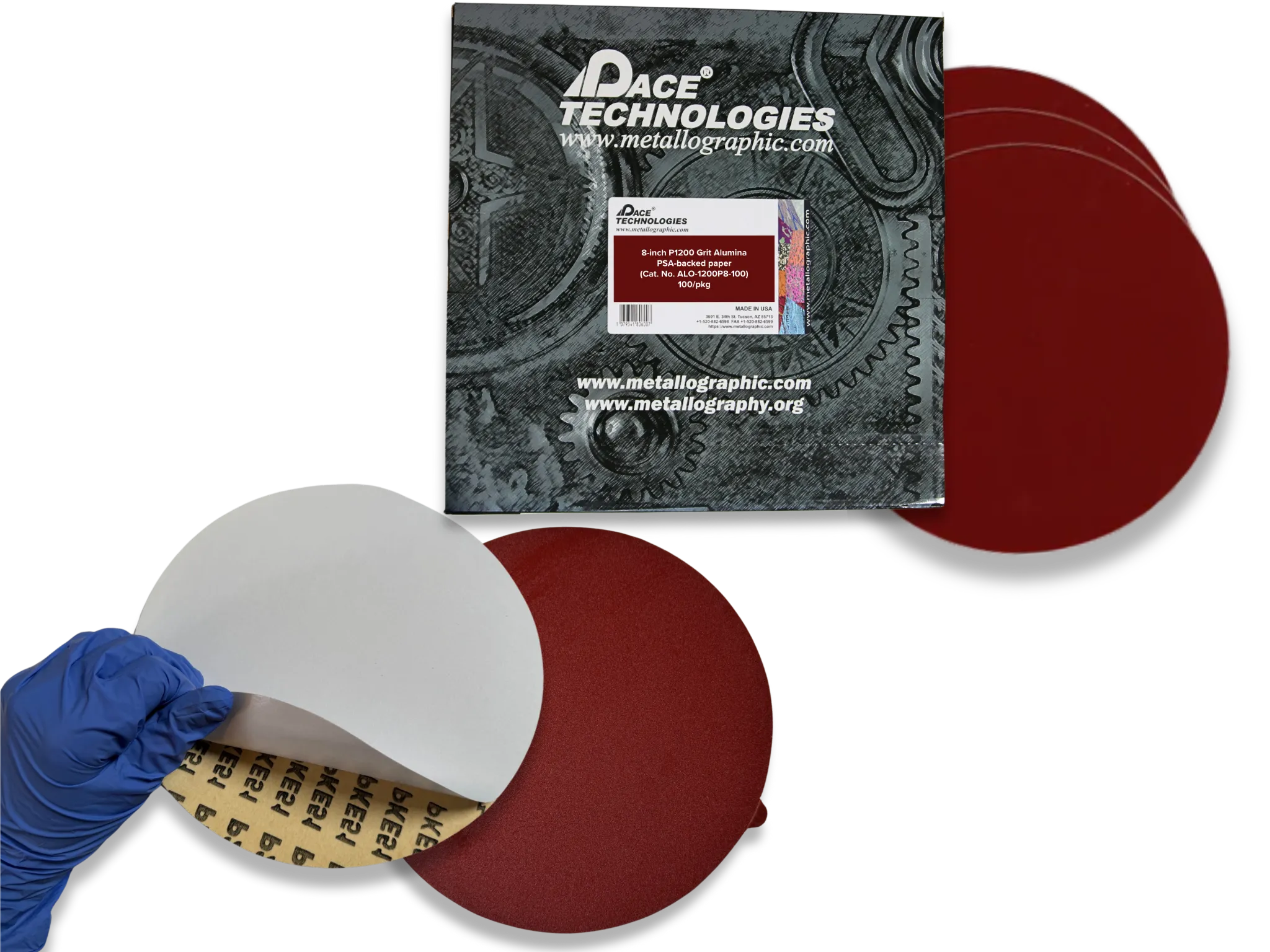
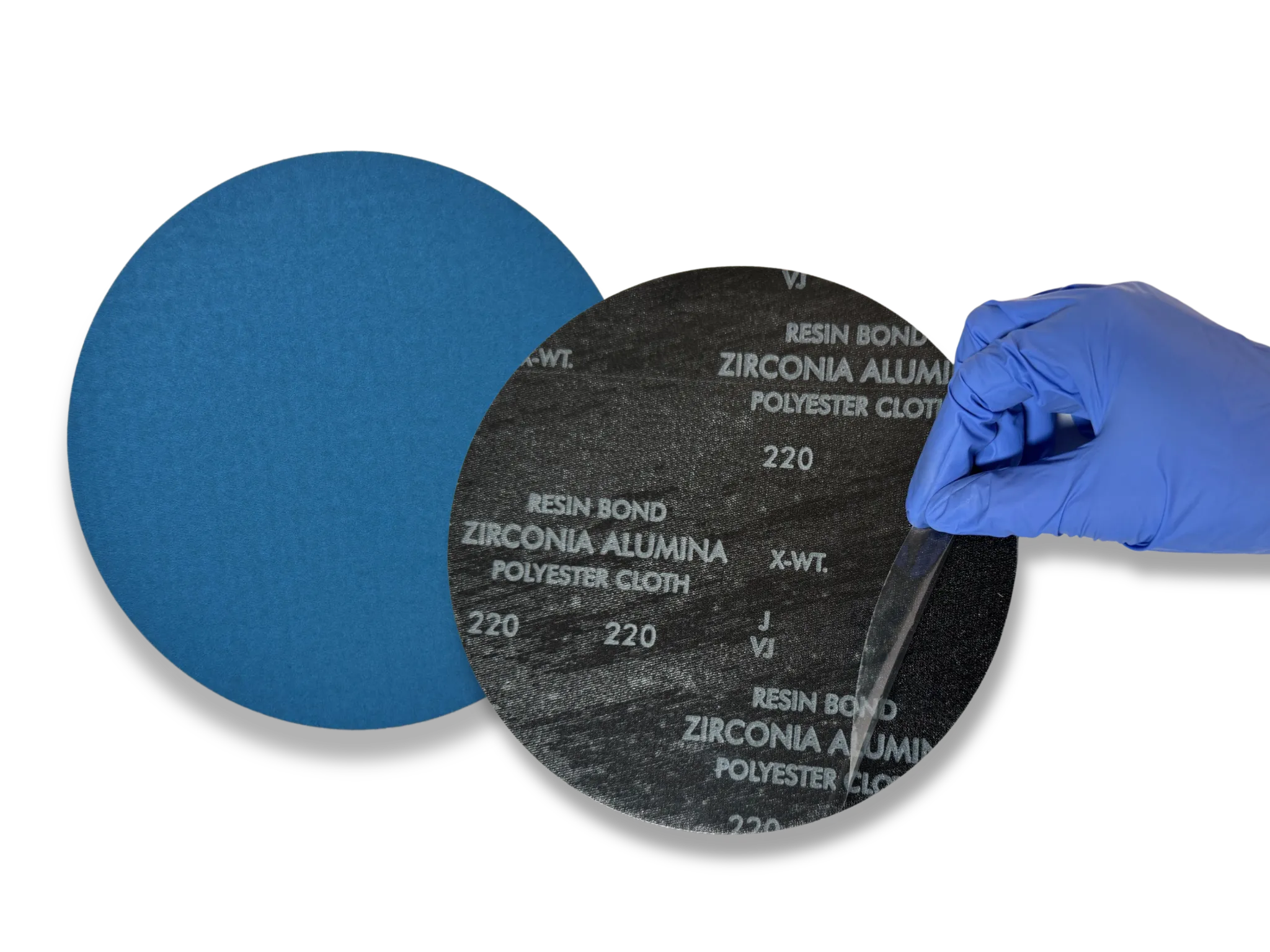
Our premium abrasive grinding consumables are engineered for precision and efficiency in metallographic sample preparation. Choose from high-quality silicon carbide (SiC), alumina, and zirconia abrasive papers, each optimized for specific material removal rates, surface quality, and preparation workflows. Designed for durability and consistent performance.
Select SiC for rapid material removal with minimal deformation, alumina for soft materials to prevent abrasive embedding, or zirconia for aggressive grinding of tough materials with extended lifespan.
Monitor Grit Progression
Start with coarser grits for bulk material removal and gradually progress to finer grits to reduce scratches and improve surface quality.
Ensure Proper Lubrication
Use water or grinding fluids to prevent overheating, extend paper life, and maintain surface integrity throughout the preparation process.
Introduction
Selecting the right abrasive grinding paper is essential for achieving precise and consistent metallographic results, as different abrasives impact material removal rates, surface quality, and preparation efficiency. Silicon carbide (SiC) papers are the workhorse abrasive for ferrous metals across the full hardness range, from low-carbon and stainless steels through hardened tool steels, and also serve well on many non-ferrous metals. SiC's high hardness (≈2500 HV) and friable, self-sharpening grain structure produce fast, clean material removal. Alumina (Al₂O₃) papers, although slightly softer than SiC (≈2000 HV), use a tougher, less friable grain that resists fracturing into embedding shards. This makes alumina the preferred choice for very soft, ductile materials such as copper, aluminum, brass, gold, and silver, as well as refractory metals such as rhenium, tungsten, and vanadium, where SiC fragments can become lodged in the specimen surface. Zirconia alumina is recommended for tough, high-strength materials that require aggressive grinding and extended paper life. For ceramics, cemented carbides, and ceramic-matrix composites, diamond abrasives are required, as conventional SiC, alumina, and zirconia are not hard enough for efficient grinding. Choosing the appropriate abrasive ensures minimal surface deformation, streamlining the preparation process and improving microstructural analysis.
Abrasive Grinding Guideline
Select the appropriate abrasive and grit progression based on your material type and preparation objectives.
Material
Objective
Recommendation
Soft non-ferrous metals (Al, Cu, Brass, Zn, etc.)
Minimize abrasive embedding & deformation
P220, P500, P1200 grit ALO paper (use P120 only for heavy stock removal)
Hard ferrous metals (High carbon, tool steel, case-hardened, martensitic SS)
Planarize & minimize deformation
180, 240, 320, 400, 600 grit SiC paper
Super alloys (High Ni & Co alloys, Ti alloys)
Minimize deformation
70µm diamond disk, 9µm SIRIUS, 3µm ORION composite disk
Ceramics, CMCs, minerals
Minimize surface & subsurface damage
30µm polycrystalline diamond on Metal Mesh cloth
MMCs, PMCs
Reduce fracturing & matrix deformation
240 or 320 grit SiC paper
Understanding Grit Size Designations
Metallographic abrasives are classified by grit size. For coarse abrasives (typically up to 240 grit), grit size historically corresponds to the number of mesh openings per linear inch used to screen the particles. For finer grits, sieving is no longer practical, and particles are classified by sedimentation (Stokes' law), electrical resistance, or laser diffraction. Higher grit numbers indicate finer particles. For example, ANSI 120 grit particles measure approximately 116 microns (median), while ANSI 1200 grit is approximately 6.5 microns.
Two primary grading systems are used worldwide: the ANSI/CAMI (American) standard, governed by ANSI B74.18, and the European P-grade system, governed by FEPA standards. The two systems use different measurement methodologies and tolerance distributions, with FEPA P-grades using a narrower particle size distribution. The systems agree at coarse grits but diverge sharply at fine grits. For instance, ANSI 1200 grit (≈6.5 µm) corresponds to P4000 (≈3 µm), and ANSI 600 (≈16 µm) corresponds to P1200 (≈15 µm). Understanding these differences is critical when selecting abrasives or following international metallographic procedures.
Grit Size Comparison Chart:
System
120
180
240
320
360
400
600
800
1200
ANSI/CAMI (Standard)
120
180
240
320
360
400
600
800
1200
European (P-grade)
P120
P180
P280
P400
P600
P800
P1200
P1500
P2500
ANSI/CAMI Microns (median)
116 µm
78 µm
51.8 µm
34.3 µm
27.3 µm
22.1 µm
14.5 µm
12.2 µm
6.5 µm
FEPA P-grade Microns (median)
127 µm
78 µm
52.2 µm
35 µm
25.8 µm
21.8 µm
15.3 µm
12.6 µm
8.4 µm
💡 Need to convert between grit systems? Use our Grit Size Converter Tool to quickly convert between ANSI, FEPA, JIS, and micron standards.
The metallographic specimen preparation process is influenced by key machine parameters: grinding/polishing pressure, relative velocity distribution, and grinding direction. Understanding these factors helps optimize material removal while minimizing damage.
Grinding Pressure
Grinding pressure depends on the applied force and the specimen's surface area. For harder specimens, pressure is best defined as force divided by the specimen area.
Higher pressure increases material removal but also leads to more surface and subsurface damage.
For SiC papers, as abrasive grains dull, increasing pressure can extend paper life.
Frictional heat from higher pressure can aid in chemical-mechanical polishing (CMP) of ceramics, minerals, and composites.
Friable materials (e.g., nodular cast iron) may benefit from higher pressure and lower velocity to retain inclusions and secondary phases.
Grinding Direction
Grinding orientation affects preparation results, particularly for coated specimens. By controlling these parameters, metallographic grinding can achieve efficient material removal while preserving microstructural integrity.
Brittle coatings: Abrasive should move through the coating into the substrate to keep the coating in compression.
Brittle substrates with ductile coatings: Abrasive should move through the substrate into the coating to prevent delamination.
Relative Velocity
Modern grinding/polishing machines use disk-on-disk rotation, creating variable velocity distributions based on head and base speeds.
For minimal damage and better flatness, match head and base speeds (e.g., 200 rpm in the same direction).
For high stock removal, a slower head speed with a higher base speed is more aggressive but may lead to non-uniform material removal and increased damage.
For polishing, reducing speed to 100/100 rpm is recommended.
CMP processes benefit from higher speeds if brittle phases are absent.
Speed Configuration Examples:
Head Speed (rpm)
Base Speed (rpm)
Velocity Distribution
Characteristics
Application
150
300-600
High
- Fast material removal
- Uneven grinding across surface
- Hard specimens
- Coarse grinding
200
200
Minimal
- Even stock removal
- Low material loss
- Minimal surface damage
- Flatness control
- Retains inclusions & brittle phases
📚 Want to learn more advanced techniques? Explore our comprehensive Grinding Techniques Guide for detailed procedures, troubleshooting tips, and best practices.
Recommended Procedures
For best results with fixed-abrasive grinding, start with the finest abrasive possible, typically 240 or 320 grit, using coarser grit only for heavy stock removal. Apply an appropriate lubricant to the abrasive surface; water is the most common choice, while water-soluble oils are recommended for water-sensitive specimens. To maintain surface integrity, always rinse specimens thoroughly before proceeding to a finer abrasive.
Paper Application: For PSA (pressure-sensitive adhesive) backed papers, ensure the grinding platen is clean and dry before application. Align the paper carefully and apply firm, even pressure from the center outward to eliminate air bubbles. For plain-backed papers used with water adhesion, wet the platen surface thoroughly and smooth the paper from center to edge, ensuring no wrinkles or air pockets remain.
Grinding Technique: Apply consistent, moderate pressure across all specimens in the holder. Excessive pressure accelerates paper wear and increases surface damage. Rotate the specimen holder periodically during grinding to ensure even paper wear and consistent material removal across all specimens.
Specimen Rinsing: Between each grit change, thoroughly rinse specimens with water, dry with compressed air or lint-free cloth, and inspect under magnification. Any coarse abrasive particles carried to finer grinding steps will scratch the surface and compromise preparation quality. Clean specimen holders between steps to prevent cross-contamination.
Paper Life and Replacement: Replace grinding papers when you observe: (1) Decreased material removal rate requiring excessive time, (2) Increased specimen heating during grinding, (3) Visible paper wear, glazing, or abrasive coating damage, or (4) Inconsistent scratch patterns across the specimen surface. SiC papers typically last 15-30 specimens depending on material hardness and grit size; alumina papers may wear faster on hard materials; zirconia papers offer extended life, often 2-3 times longer than SiC. Using worn papers increases grinding time, generates excessive heat, and can introduce surface damage that's difficult to remove in subsequent steps.
Wet vs. Dry Grinding: Wet grinding with water or lubricant is standard for metallographic preparation, and aluminum and its alloys are routinely wet-ground with water. Water cooling prevents specimen overheating (which can alter microstructure), flushes away swarf to prevent paper loading, and extends paper life. Dry grinding is rarely used in metallography but may be necessary for genuinely water-reactive materials such as magnesium and its alloys, sodium- or potassium-bearing specimens, and materials with water-soluble phases. When dry grinding is required, use dust extraction/ventilation, expect faster paper wear, monitor specimen temperature carefully, and transition to wet grinding as soon as the water-sensitive preparation stage is complete. For most water-sensitive applications, water-soluble oils or petroleum-based lubricants provide better results than dry grinding.
🔧 Need detailed step-by-step procedures? Visit our Support Procedures Library for material-specific preparation protocols, equipment setup guides, and troubleshooting workflows.
Products
Silicon Carbide
Silicon Carbide (SiC) is a synthetic abrasive formed through a high-temperature reaction between silica and carbon. With a hexagonal-rhombohedral crystal structure and a hardness of approximately 2500 HV, SiC is an excellent material for cutting and grinding. Its natural brittleness allows it to fracture easily, continuously exposing sharp edges for self-sharpening. This property makes SiC ideal for maximizing cutting efficiency while minimizing surface and subsurface damage. It is commonly used in metallographic preparation, found in abrasive blades and coated grinding papers available in grit sizes from coarse 60 to fine 1200.
Available Diameters: Offered in 8", 10", 12", and 14" sizes to accommodate various grinding equipment.
Grit Range: Covers 60 to 1200 grit, providing options for coarse grinding to fine surface preparation.
Backing Options: Available in plain, PSA (pressure-sensitive-adhesive), and foil formats to suit different mounting preferences and workflows.
Alumina (aluminum oxide, Al₂O₃) grinding papers offer a critical advantage when preparing soft, ductile materials prone to abrasive grain embedding. Derived from bauxite, alumina abrasives are slightly softer and tougher than silicon carbide, with a hardness of approximately 2000 HV (Mohs 9). This toughness means alumina grains are less friable, meaning they resist fracturing and embedding into soft specimen surfaces better than SiC. For materials like copper, aluminum, brass, gold, silver, and other soft non-ferrous metals, alumina papers significantly reduce the common problem of abrasive particles becoming embedded in the polished surface, which would appear as artifacts during microscopic examination. Alumina papers also perform well on refractory metals (rhenium, tungsten, vanadium) where conventional SiC may embed or cause excessive smearing. The European P-grading system is used for alumina papers, where P-grade numbers differ from standard ANSI grit designations (e.g., P220 ≈ 240 grit, P1200 ≈ 600 grit).
Available Diameters: Offered in 8", 10", and 12" sizes to accommodate various grinding equipment.
Grit Range: European P-grade system - P120, P220, P500, P1200 (see Grinding Guideline section above for grit size comparison chart).
Backing Options: Available in plain and PSA-backing formats to suit different mounting preferences and workflows.
Zirconia alumina is a premium synthetic abrasive combining zirconium oxide (ZrO₂) with aluminum oxide, creating a tough, self-sharpening abrasive ideal for demanding grinding applications. Unlike silicon carbide, which fractures to expose new cutting edges, zirconia alumina undergoes micro-fracturing that continuously generates sharp cutting points while maintaining the structural integrity of the abrasive grain. This unique property provides significantly longer paper life compared to conventional abrasives, making it highly cost-effective for high-volume grinding operations. Zirconia alumina excels at grinding tough, hard-to-machine materials including stainless steels, nickel-based superalloys, titanium alloys, and other challenging metallographic specimens where conventional abrasives wear rapidly. Its exceptional toughness and durability make it the preferred choice when aggressive material removal is required without frequent paper changes, particularly in production environments or when processing large batches of difficult materials.
Available Diameters: Offered in 8", 10", and 12" sizes to accommodate various grinding equipment.
Grit Range: Available in 120 and 220 grit for aggressive coarse to medium grinding applications.
Backing Options: Available with PSA (pressure-sensitive adhesive) backing for easy application and removal.
- Adjust specimen positioning for even paper wear
- Synchronize head and base speeds, same direction
- Grind at 200/200 rpm, polish at 100/100 rpm
Excessive vibration
- High load or low speed
- Machine design limitations
- Inadequate lubrication
- Mismatched head/base speeds
- Reduce load or increase speed
- Consult vendor for machine upgrades
- Increase lubricant flow or use water-based lubricant
- Synchronize head and base speeds, same direction
- Grind at 200/200 rpm, polish at 100/100 rpm
Abrasive grain embedding
- Common in soft material grinding
- Mismatched head/base speeds
- Use alumina papers instead of SiC
- Synchronize head and base speeds, same direction
- Grind at 200/200 rpm, polish at 100/100 rpm
The PENTA Series features hand grinders with silicon carbide rolls in various grits for precision material removal and surface preparation. These durable systems provide efficient grinding with water cooling for optimal metallographic sample preparation.
The NFZ System integrates NANO manual polishers, FEMTO autopolishing heads, ZETA automated dispensers, and RC recirculating filter systems into a complete grinding and polishing workflow. This integrated solution provides flexibility for initial grinding, automated precision polishing, consistent abrasive application, and continuous coolant filtration throughout the entire sample preparation process.
What's the difference between silicon carbide, alumina, and zirconia grinding papers?
Silicon carbide (SiC) is a hard (≈2500 HV), friable, self-sharpening abrasive and is the standard choice for grinding ferrous metals across the full hardness range, including hardened tool steels. Alumina (≈2000 HV) is slightly softer but uses a tougher, less friable grain that resists fracturing into embedding shards, making it the preferred choice for soft, ductile non-ferrous metals such as aluminum, copper, brass, and precious metals. Zirconia alumina offers exceptional toughness and extended paper life, making it ideal for tough, hard-to-grind materials such as stainless steels, nickel-based superalloys, and titanium alloys. Note that ceramics, cemented carbides, and ceramic-matrix composites require diamond abrasives, as none of these conventional abrasives are hard enough for efficient grinding. Choose based on your material's hardness and ductility.
What grit should I start with for initial grinding?
Start with the finest abrasive possible that will achieve your objectives in a reasonable time, typically 240 or 320 grit. Only use coarser grits (120-180) for heavy stock removal. Starting too coarse can introduce deep scratches that are difficult to remove in subsequent steps and may damage subsurface microstructure.
How do I prevent abrasive grain embedding in soft materials?
Abrasive grain embedding is common when grinding soft materials like aluminum, copper, or lead. To minimize it: 1) Use alumina papers instead of silicon carbide, 2) Synchronize grinding head and base speeds in the same direction, 3) Use adequate lubrication (water or water-soluble oils), 4) Reduce grinding pressure, and 5) Consider using a slightly finer grit than normal to reduce embedding while maintaining removal rates.
Why should I rinse specimens between grinding steps?
Thorough rinsing between grinding steps is critical to prevent cross-contamination. Coarser abrasive particles carried over to finer grinding stages will scratch the surface and undo your progress. Rinse specimens with water, dry with compressed air or lint-free wipes, and inspect under magnification to ensure no residual abrasive remains before proceeding to the next finer grit.
What causes excessive vibration during grinding?
Excessive vibration typically results from: 1) Too much load or too low speed, 2) Mismatched head and base speeds or directions, 3) Inadequate lubrication, or 4) Machine design limitations. To resolve: synchronize head and base speeds in the same direction (typically 200/200 rpm for grinding), increase lubricant flow, reduce load, or increase speed. If vibration persists, consult your equipment vendor about machine upgrades or maintenance.
Can I use water as a lubricant for all materials?
Water is the most common and economical lubricant for grinding most materials, including aluminum, copper, and steels. However, for genuinely water-reactive materials such as magnesium and its alloys, sodium- or potassium-bearing specimens, and materials with water-soluble phases, use water-soluble oils or petroleum-based lubricants instead. Always ensure adequate lubricant flow to cool the specimen, flush away swarf, and prevent abrasive loading on the paper.