
NFZ System (NANO-FEMTO-ZETA-RC)
Complete automated grinding and polishing workflow with precise control for polycrystalline diamond polishing and final finishing steps.
PACE Technologies' polycrystalline diamond polishing abrasives are designed for rapid material removal with minimal surface damage. Featuring a multi-faceted crystal structure, these abrasives enhance surface leveling and reduce sub-surface deformation, making them ideal for polishing hard and brittle materials.

Use high-viscosity suspensions for aggressive polishing, and low-viscosity for delicate or heat-sensitive materials.
Use low-nap or non-woven polishing pads to optimize abrasive contact and surface finish.
Polycrystalline diamond cuts faster, so reduce polishing time and pressure to prevent over-polishing or relief.
Polycrystalline diamond polishing is a critical step in achieving uniform, high-quality surface finishes during metallographic sample preparation. With its multi-faceted crystal structure, polycrystalline diamond offers superior material removal rates and minimized subsurface damage, especially on hard and brittle materials. These abrasives are best used with low- to medium-napped polishing pads to maintain flatness and avoid issues like relief or edge rounding. Selecting the proper viscosity and suspension format, paired with the right cloth and lubrication, ensures efficient, reproducible polishing results for accurate microstructural analysis.
This reference outlines best-practice abrasive sizes for rough and final polishing across metals, ceramics, and composite materials. Proper abrasive selection is critical to ensure accurate microstructural representation, prevent surface damage, and optimize polishing efficiency.
| Metal | Rough Polishing (Diamond) | Final Polishing (Oxide) | ||||
|---|---|---|---|---|---|---|
| Abrasive Size | 9 µm | 6 µm | 3 µm | 1 µm | Al2O3 | SiO2 |
| Aluminum | ||||||
| Copper / Brass | ||||||
| Stainless Steel | ||||||
| Soft Steel | ||||||
| Hard Steel | ||||||
| Tool Steel | ||||||
| Titanium | Etch Polish | |||||
| Zinc, Tin, Lead | ||||||
| Ceramic / Composite | Coarse Grind | Fine Grind | Rough Polish | Fine Polish | ||
|---|---|---|---|---|---|---|
| Diamond Size | 30 µm | 15 µm | 9 µm | 6 µm | 3 µm | 1 µm + SiO2 |
| Alumina | ||||||
| Silicon Nitride | ||||||
| Polymer Composite | ||||||
| Metal Matrix Composite | ||||||
| Ceramic Matrix Composite | ||||||
| Cermet | ||||||
Note: These selections reflect proven laboratory procedures balancing speed, flatness, and structure preservation. Adjust abrasive types and sequence for material-specific variables such as grain size, hardness, and thermal sensitivity.
Polymer composites: Diamond can embed in soft polymer matrices and carry through to subsequent steps. For polymer-dominated samples, SiC grinding (through P2400 or P4000) followed directly by alumina or colloidal silica is often preferred. Reserve diamond polishing for fiber- or filler-dominated composites where the matrix can tolerate it.
| Pad Image & Link | Use Case | Pad Icon | Polishing Stage |
|---|---|---|---|

|
CERMESH metal mesh pad used for semi-fixed abrasive coarse to intermediate lapping. Excellent for initial removal of damage from sectioning and hard materials. |

|
Coarse / Intermediate |

|
POLYPAD is a durable synthetic polyester pad ideal for intermediate polishing, especially with 6-15 µm diamond abrasives. Designed as a long-life nylon alternative. |

|
Intermediate |

|
TEXPAN is a widely used non-woven intermediate polishing pad, compatible with most diamond suspensions. Effective across a broad range of materials. |

|
Intermediate |

|
Black CHEM 2 is a porometric polymer pad with rubber-like consistency, offering balanced action between low and high nap pads. Ideal for moderate nap intermediate polishing. |

|
Intermediate |

|
DACRON II is a non-napped woven polishing pad widely used in Europe for intermediate steps on metals. Suitable for 1-15 µm diamond abrasives. |

|
Intermediate |

|
NYPAD is a low-napped nylon pad tailored for intermediate polishing of harder metals and alloys. Performs well with mid-size diamond abrasives. |

|
Intermediate |

|
GOLD PAD is a low-napped pad ideal for 1-9 µm polishing. Designed for consistent material removal and flatness control during final pre-polishing. |

|
Intermediate |

|
ATLANTIS is a woven low-nap final polishing pad with foam backing for enhanced compliance. Ideal for 1-6 µm diamond. Great for critical surface flatness needs. |

|
Final |

|
MICROPAD is a high-napped final polishing pad ideal for producing a mirror finish on metals and polymers. Recommended for <1 µm diamond or colloidal silica. |

|
Final |

|
TRICOTE is a tight high-napped final polishing pad for metals. Offers better control of surface texture and minimal abrasive drag. |

|
Final |

|
NAPPAD is a very high-napped final polishing pad tailored for soft metals and polymers. Provides gentle polishing action to minimize pull-out and relief. |

|
Final |

|
MOLTEC 2 is a wool-based final polishing cloth used when edge retention is not critical. Works well with alumina and colloidal silica on metals. |

|
Final |

|
FELT PAD is a thick final polishing pad made for large samples or glass. Ideal for use with colloidal silica or alumina slurries where surface uniformity is key. |

|
Final |
Polycrystalline diamond polishing is typically performed in one or two stages depending on material hardness and surface condition. For rough polishing, low- to medium-napped pads are used with coarse polycrystalline diamond suspensions or pastes to efficiently remove grinding damage. In many cases, this may be followed by a finer grade of polycrystalline diamond for surface refinement. Due to the abrasive’s multi-crystalline nature, material removal is rapid yet controlled, minimizing heat and deformation. Excessive polishing should be avoided to prevent artifacts such as relief, smear, or rounding.
To prevent common polishing issues such as edge rounding, relief, or abrasive embedding:
| Description | Quantity | Low Viscosity | High Viscosity | Product Image |
|---|---|---|---|---|
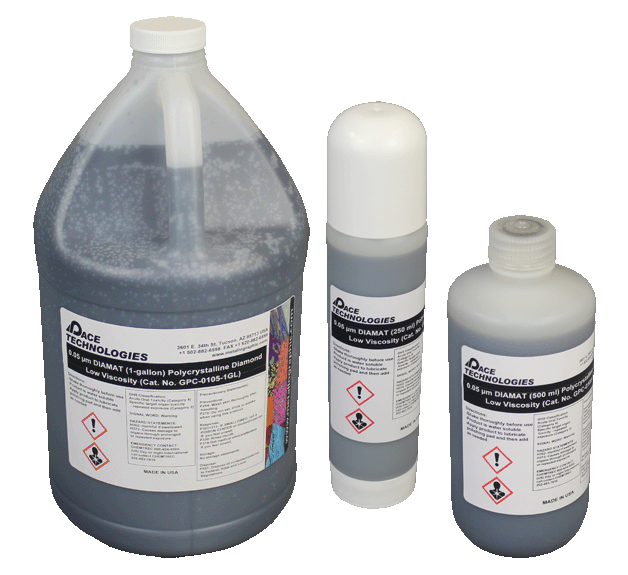
| 0.05 micron DIAMAT Polycrystalline diamond | 250 ml 500 ml 1 gallon |
GPC-0105-250 GPC-0105-500 GPC-0105-1GL |
PC-0105-250 PC-0105-500 PC-0105-1GH |
 |
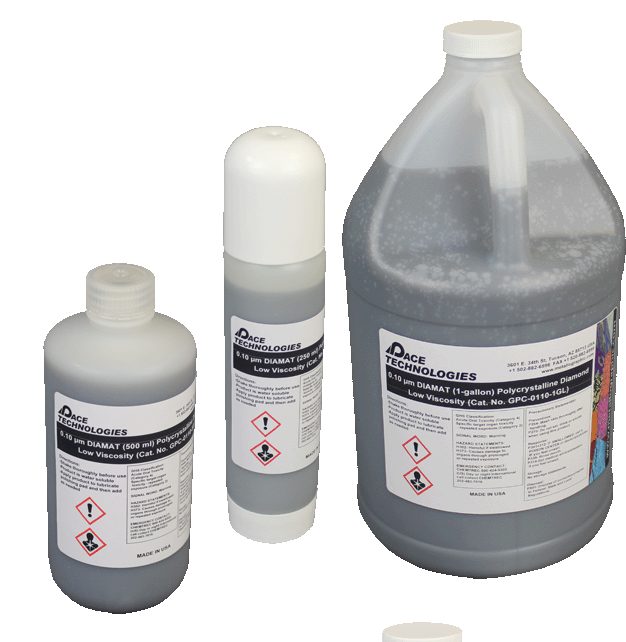
| 0.1 micron DIAMAT Polycrystalline diamond | 250 ml 500 ml 1 gallon |
GPC-0110-250 GPC-0110-500 GPC-0110-1GL |
PC-0110-250 PC-0110-500 PC-0110-1GH |
 |
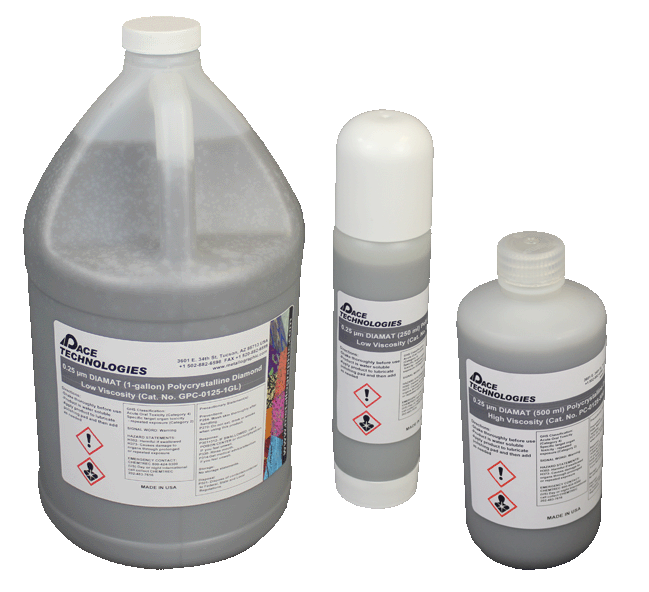
| 0.25 micron DIAMAT Polycrystalline diamond | 250 ml 500 ml 1 gallon |
GPC-0125-250 GPC-0125-500 GPC-0125-1GL |
PC-0125-250 PC-0125-500 PC-0125-1GH |
 |
| 0.5 micron DIAMAT Polycrystalline diamond | 250 ml 500 ml 1 gallon |
GPC-0150-250 GPC-0150-500 GPC-0150-1GL |
PC-0150-250 PC-0150-500 PC-0150-1GH |
 |
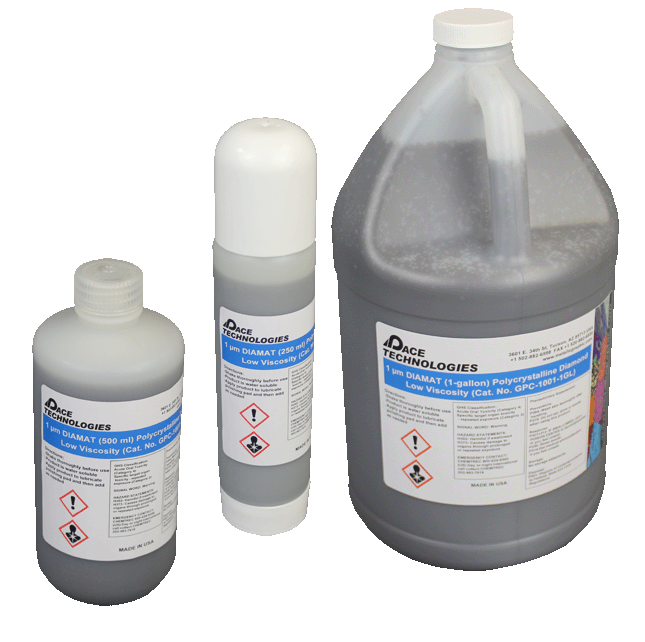
| 1 micron DIAMAT Polycrystalline diamond | 250 ml 500 ml 1 gallon |
GPC-1001-250 GPC-1001-500 GPC-1001-1GL |
PC-1001-250 PC-1001-500 PC-1001-1GH |
 |
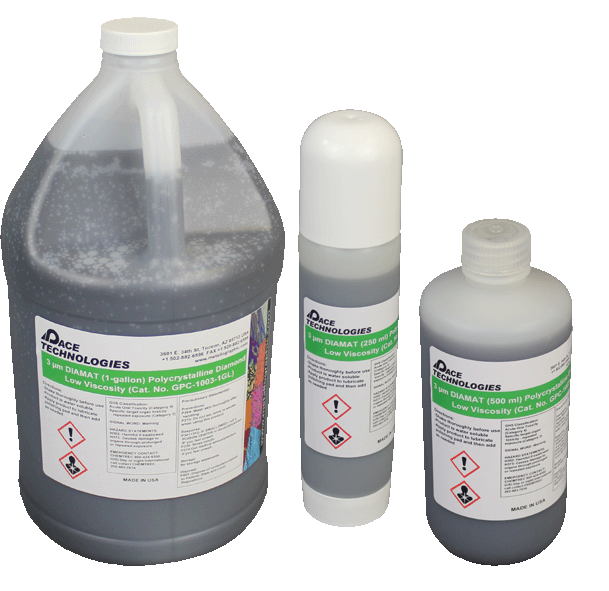
| 3 micron DIAMAT Polycrystalline diamond | 250 ml 500 ml 1 gallon |
GPC-1003-250 GPC-1003-500 GPC-1003-1GL |
PC-1003-250 PC-1003-500 PC-1003-1GH |
 |
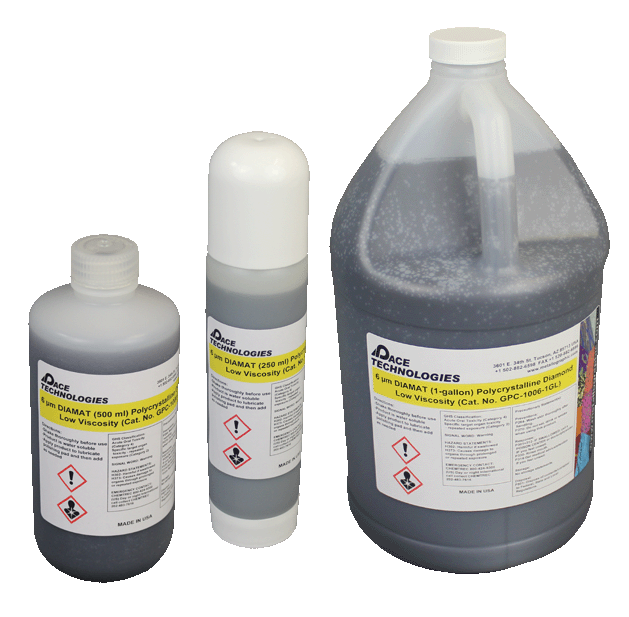
| 6 micron DIAMAT Polycrystalline diamond | 250 ml 500 ml 1 gallon |
GPC-1006-250 GPC-1006-500 GPC-1006-1GL |
PC-1006-250 PC-1006-500 PC-1006-1GH |
 |
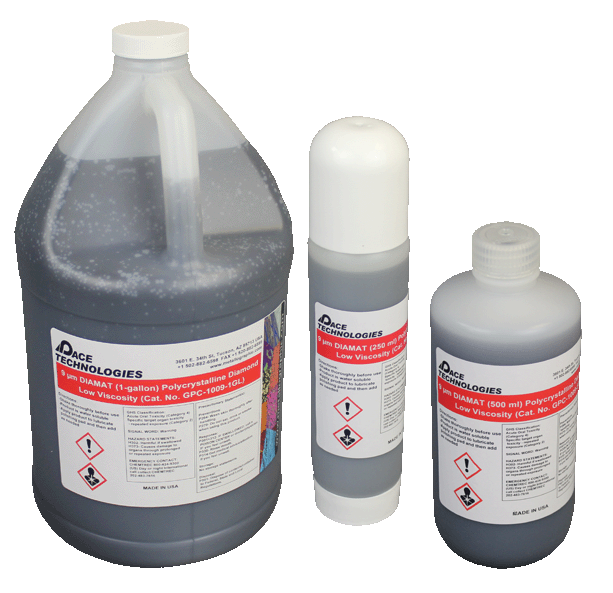
| 9 micron DIAMAT Polycrystalline diamond | 250 ml 500 ml 1 gallon |
GPC-1009-250 GPC-1009-500 GPC-1009-1GL |
PC-1009-250 PC-1009-500 PC-1009-1GH |
 |
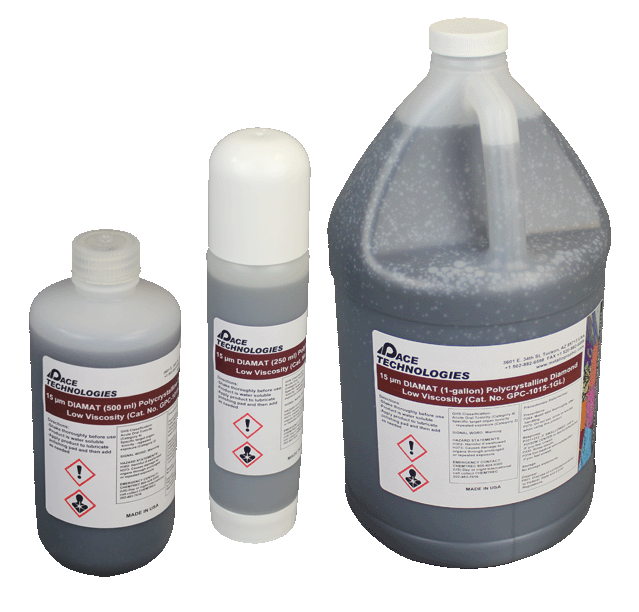
| 15 micron DIAMAT Polycrystalline diamond | 250 ml 500 ml 1 gallon |
GPC-1015-250 GPC-1015-500 GPC-1015-1GL |
PC-1015-250 PC-1015-500 PC-1015-1GH |
 |
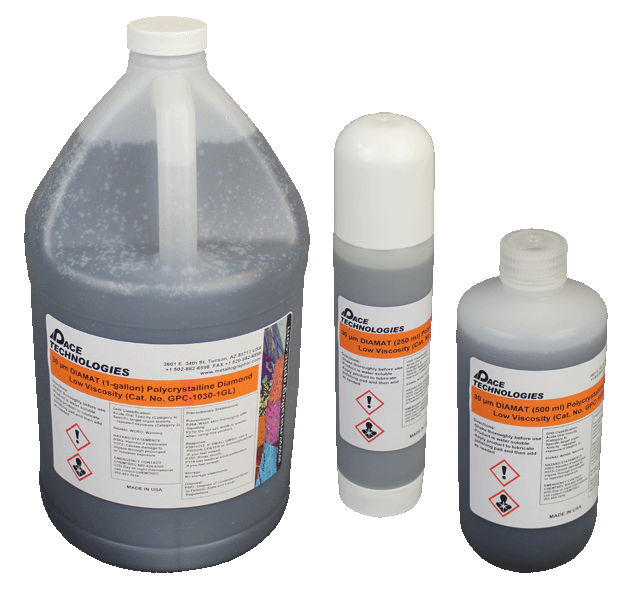
| 30 micron DIAMAT Polycrystalline diamond | 250 ml 500 ml 1 gallon |
GPC-1030-250 GPC-1030-500 GPC-1030-1GL |
PC-1030-250 PC-1030-500 PC-1030-1GH |
 |
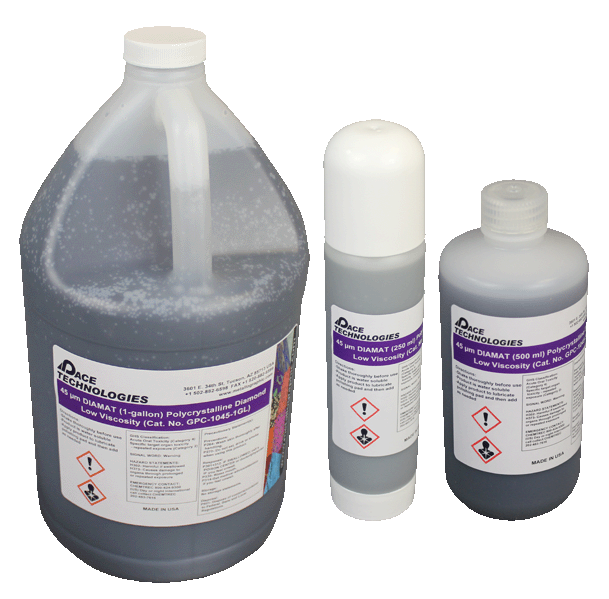
| 45 micron DIAMAT Polycrystalline diamond | 250 ml 500 ml 1 gallon |
GPC-1045-250 GPC-1045-500 GPC-1045-1GL |
PC-1045-250 PC-1045-500 PC-1045-1GH |
 |
| Description | Quantity | Catalog Number | Product Image |
|---|---|---|---|
| 1 micron (blue) DIAMAT PC Suspension | 1 liter | PC-1001-1L |  |
| 1 micron (blue) DIAMAT PC Suspension | 1 gallon | PC-1001-1GLB | |
| 3 micron (green) DIAMAT PC Suspension | 1 liter | PC-1003-1L | 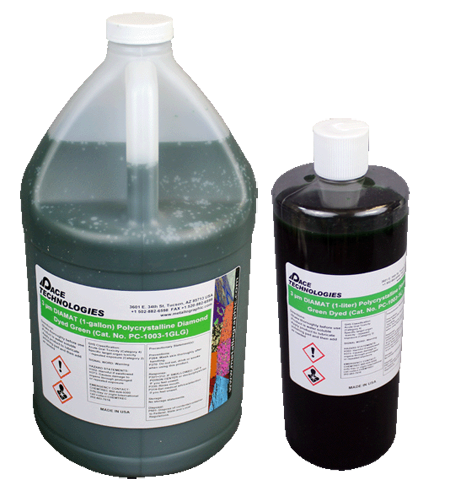 |
| 3 micron (green) DIAMAT PC Suspension | 1 gallon | PC-1003-1GLG | |
| 6 micron (yellow) DIAMAT PC Suspension | 1 liter | PC-1006-1L | 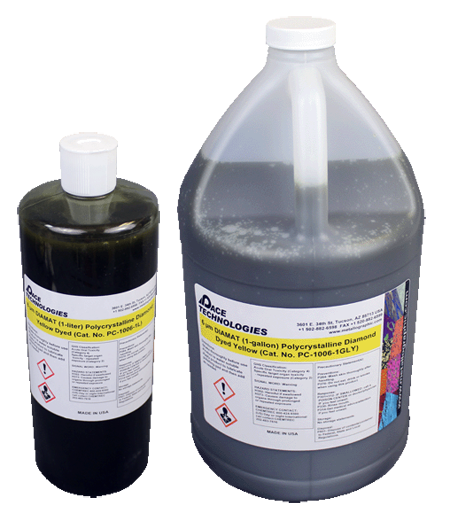 |
| 6 micron (yellow) DIAMAT PC Suspension | 1 gallon | PC-1006-1GLY | |
| 9 micron (red) DIAMAT PC Suspension | 1 liter | PC-1009-1L | 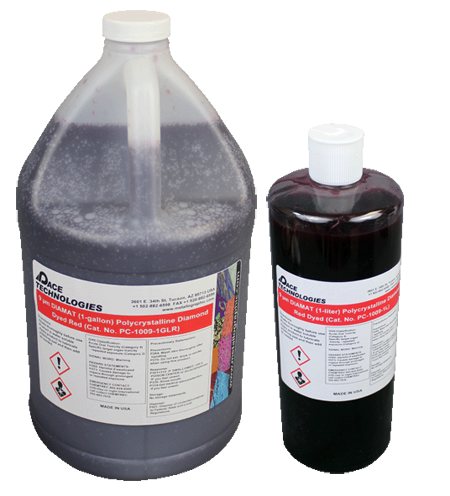 |
| 9 micron (red) DIAMAT PC Suspension | 1 gallon | PC-1009-1GLR | |
| 15 micron (brown) DIAMAT PC Suspension | 1 liter | PC-1015-1L | 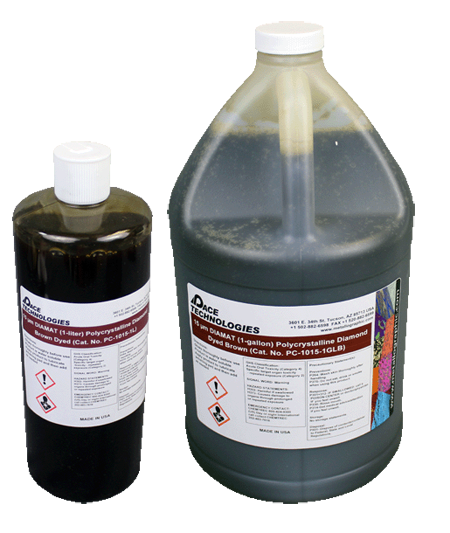 |
| 15 micron (brown) DIAMAT PC Suspension | 1 gallon | PC-1015-1GLBR | |
| 30 micron (orange) DIAMAT PC Suspension | 1 liter | PC-1030-1L | 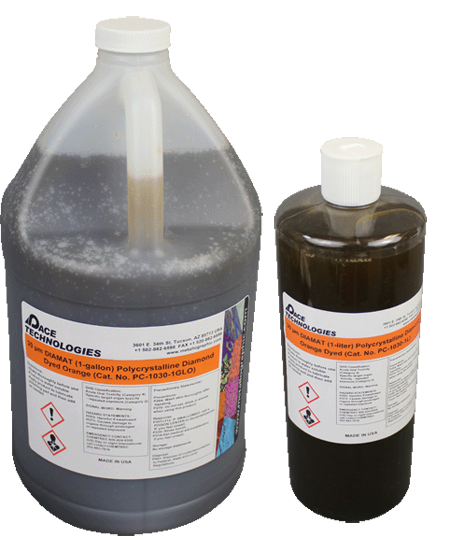 |
| 30 micron (orange) DIAMAT PC Suspension | 1 gallon | PC-1030-1GLO | |
| 45 micron (purple) DIAMAT PC Suspension | 1 liter | PC-1045-1L | 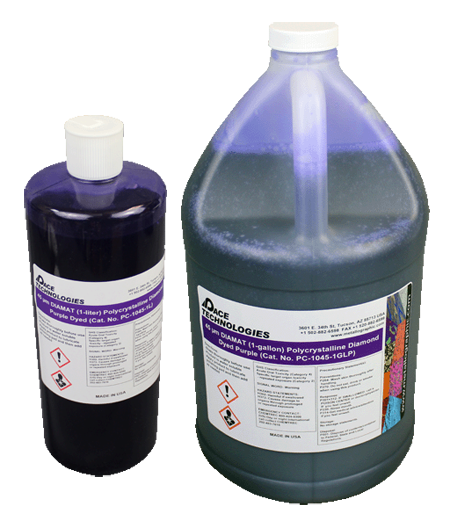 |
| 45 micron (purple) DIAMAT PC Suspension | 1 gallon | PC-1045-1GLP |
| Description | Quantity | Catalog Number | Product Image |
|---|---|---|---|
| DIAMAT Polycrystalline Diamond Paste (0.1 µm) | 5 gm 20 gm |
PC-0210-05 PC-0210-20 |
 |
| DIAMAT Polycrystalline Diamond Paste (0.25 µm) | 5 gm 20 gm |
PC-0225-05 PC-0225-20 |
 |
| DIAMAT Polycrystalline Diamond Paste (0.5 µm) | 5 gm 20 gm |
PC-0250-05 PC-0250-20 |
 |
| DIAMAT Polycrystalline Diamond Paste (1 µm) | 5 gm 20 gm |
PC-2001-05 PC-2001-20 |
 |
| DIAMAT Polycrystalline Diamond Paste (3 µm) | 5 gm 20 gm |
PC-2003-05 PC-2003-20 |
 |
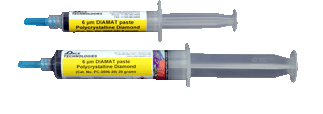
| DIAMAT Polycrystalline Diamond Paste (6 µm) | 5 gm 20 gm |
PC-2006-05 PC-2006-20 |
 |
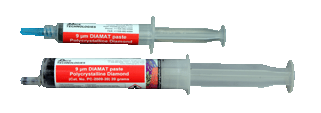
| DIAMAT Polycrystalline Diamond Paste (9 µm) | 5 gm 20 gm |
PC-2009-05 PC-2009-20 |
 |
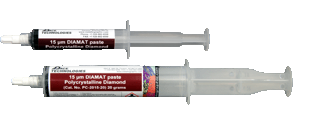
| DIAMAT Polycrystalline Diamond Paste (15 µm) | 5 gm 20 gm |
PC-2015-05 PC-2015-20 |
 |
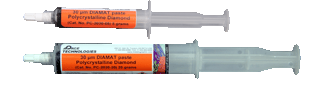
| DIAMAT Polycrystalline Diamond Paste (30 µm) | 5 gm 20 gm |
PC-2030-05 PC-2030-20 |
 |
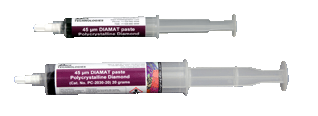
| DIAMAT Polycrystalline Diamond Paste (45 µm) | 5 gm 20 gm |
PC-2045-05 PC-2045-20 |
 |
| Description | Quantity | Catalog Number | Product Image |
|---|---|---|---|
| DIALUBE Diamond Extender | 16 oz (0.125L) 32 oz (0.24L) 1 gallon (3.8L) |
DL-3000-16 DL-3000-32 DL-3000-128 |

|
| DIALUBE Blue Alcohol Lubricant | 16 oz (0.125L) 32 oz (0.24L) 1 gallon (3.8L) |
AOD-3000-16 AOD-3000-32 AOD-3000-128 |
|
| DIALUBE Purple Alcohol Lubricant | 16 oz (0.125L) 32 oz (0.24L) 1 gallon (3.8L) |
ADL-3000-16 ADL-3000-32 ADL-3000-128 |
|
| POLYLUBE Non-Aqueous Diamond Extender | 16 oz (0.125L) 32 oz (0.24L) 1 gallon (3.8L) |
PDL-3000-16 PDL-3000-32 PDL-3000-128 |
|
| POLYLUBE Red (Anti-Corrosion) Lube | 16 oz (0.125L) 32 oz (0.24L) 1 gallon (3.8L) |
PDL-3000R-16 PDL-3000R-32 PDL-3000R-128 |
| Symptom | Cause | Solution |
|---|---|---|
| Coarse Scratching | Contaminated polishing pad or incorrect pad pairing | Replace pad; use correct pad type for polycrystalline diamond |
| Agglomerated Diamond | Pre-mixing with colloidal silica; bacterial growth in suspension | Dispense abrasives separately; replace suspension if contaminated |
| Uneven Polishing | Worn pad or uneven platen surface | Replace pad; check and resurface platen if needed |
| Edge Rounding / Excessive Relief | Too much downforce or extended polishing duration | Reduce force; shorten polishing time; verify prior steps were sufficient |
| Low Polishing Rate | Insufficient abrasive concentration or poor pad saturation | Increase suspension application rate; recharge pad with diamond |
| Tearing of Pad | High pressure or inadequate lubrication | Lower pressure; apply lubricant more frequently |
| Specimen Smear or Pull-Out | Inappropriate pad or overly aggressive abrasive size | Use lower nap pad and finer diamond grit; evaluate pad compatibility |
Complete automated grinding and polishing workflow with precise control for polycrystalline diamond polishing and final finishing steps.

High-capacity vibratory polishing system for batch processing with polycrystalline diamond abrasives.
Common questions about polycrystalline diamond polishing
Polycrystalline diamond consists of many small diamond crystals, providing multiple cutting edges for faster material removal. Monocrystalline diamond has single crystal structure with consistent geometry, offering more controlled and finer polishing. Polycrystalline is preferred for rough polishing and hard materials, while monocrystalline excels at final polishing for superior surface finish.
Polycrystalline diamond is ideal for hard and tough materials including tool steels, carbides, ceramics, cermets, and composite materials. It removes grinding damage quickly on materials that would take excessive time with conventional abrasives. For softer metals like aluminum or copper, consider finer polycrystalline grades or switch to monocrystalline diamond to avoid excessive material removal.
Suspensions (low viscosity) provide excellent lubrication and heat dissipation, ideal for automated systems and extended polishing. Pastes (high viscosity) offer concentrated abrasive delivery and longer pad life, preferred for manual polishing or when frequent recharging is impractical. Sprays provide light, controlled application for final polishing steps. Choose based on equipment type, material, and desired convenience.
Polycrystalline diamond cuts aggressively, so reduce polishing time and pressure compared to conventional abrasives. Start with shorter polishing intervals (1-2 minutes) and inspect frequently. Use low-nap or non-woven pads to minimize embedment. Monitor for signs of relief, rounding, or smearing. Once grinding damage is removed, transition to finer grades or monocrystalline diamond rather than continuing with the same abrasive.
For rough polishing with coarse polycrystalline diamond (15-9 µm), use low-nap pads like POLYPAD or GOLDPAD, or a CERMESH metal mesh for fixed-abrasive lapping on hard materials. For intermediate polishing (6-3 µm), use non-woven or low-nap pads like TEXPAN, DACRON II, or Black CHEM 2. Reserve high-nap cloths like MICROPAD and NAPPAD for final polishing with sub-micron diamond or colloidal silica; using them with coarser diamond causes excessive embedment and edge rounding.
Polycrystalline diamond can be used for final polishing with 1-3 µm grades on very hard materials where conventional alumina polishing is ineffective. However, for most materials, monocrystalline diamond (1 µm or 0.25 µm) or colloidal silica provides superior final surface finish with less risk of artifacts. Reserve polycrystalline for rough and intermediate stages, then transition to finer abrasives for the final step.