Abrasive Cutting Consumables

Our abrasive cutting consumables deliver precise, efficient cuts for metallographic sample preparation. Choose from high-performance abrasive and diamond blades, plus cutting fluids ideal for metals, ceramics, and composites. Engineered to minimize deformation, our products ensure clean results for microstructural analysis.

Abrasive Sectioning Consumables

Key Considerations

Choose the Right Blade

Match the blade to material type and hardness for clean cuts and reduced wear.

Maintain Coolant Flow

Ensure proper coolant flow to minimize heat and prevent damage.

Secure the Specimen

Clamp the specimen firmly to prevent movement and uneven cuts.

Introduction

The first step in preparing a specimen for metallographic or microstructural analysis is to locate the area of interest. Sectioning or cutting is the most common technique for obtaining this area. Our MEGA abrasive sectioning systems are designed to work seamlessly with these consumables, providing precise, low-deformation cutting for a wide range of materials. Proper sectioning has the following characteristics:

Desirable Effects:

  • Flat and cut close to the area of interest
  • Minimal microstructural damage

Undesirable Effects:

  • Smeared (plastically deformed) metal
  • Heat affected zones (burning during cutting)
  • Excessive subsurface damage (cracking in ceramics)
  • Damage to secondary phases (e.g., graphite flakes, nodules, or grain pull-out)

Blade Selection Guide

Selecting the right abrasive blade depends on material hardness, composition, and whether it's ferrous or nonferrous. Blades are characterized by abrasive type (alumina or silicon carbide), bond type (resin or resin-rubber), and hardness. Resin-bonded blades offer cleaner cuts with continuous abrasive renewal, while resin-rubber blades provide longer life. All blades feature a 32 mm (1.25-inch) arbor, sold in packages of 10, and are compatible with our MEGA abrasive sectioning equipment.

Blade Selection by Material

Material Composition Recommended Blade Blade Image
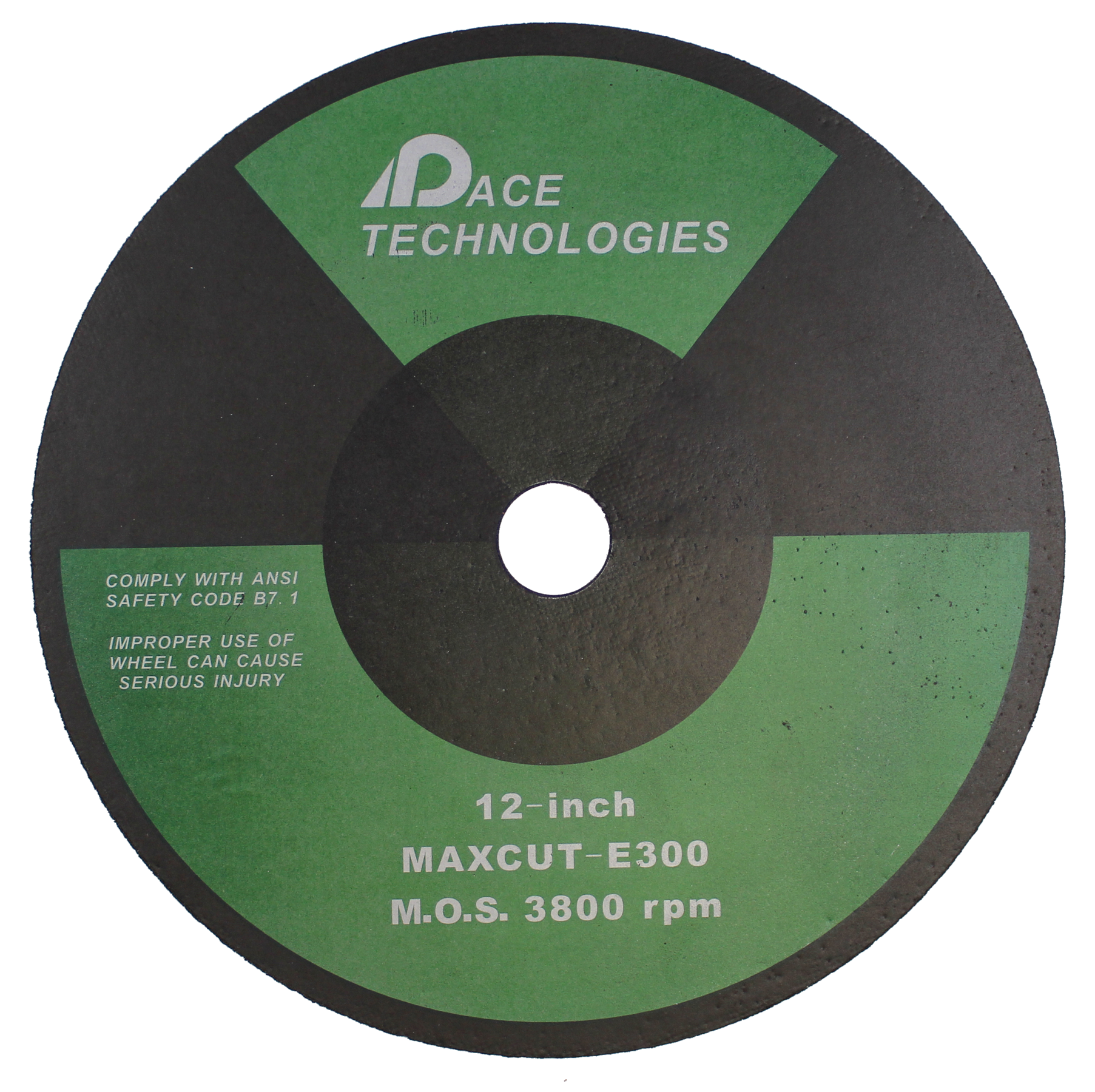
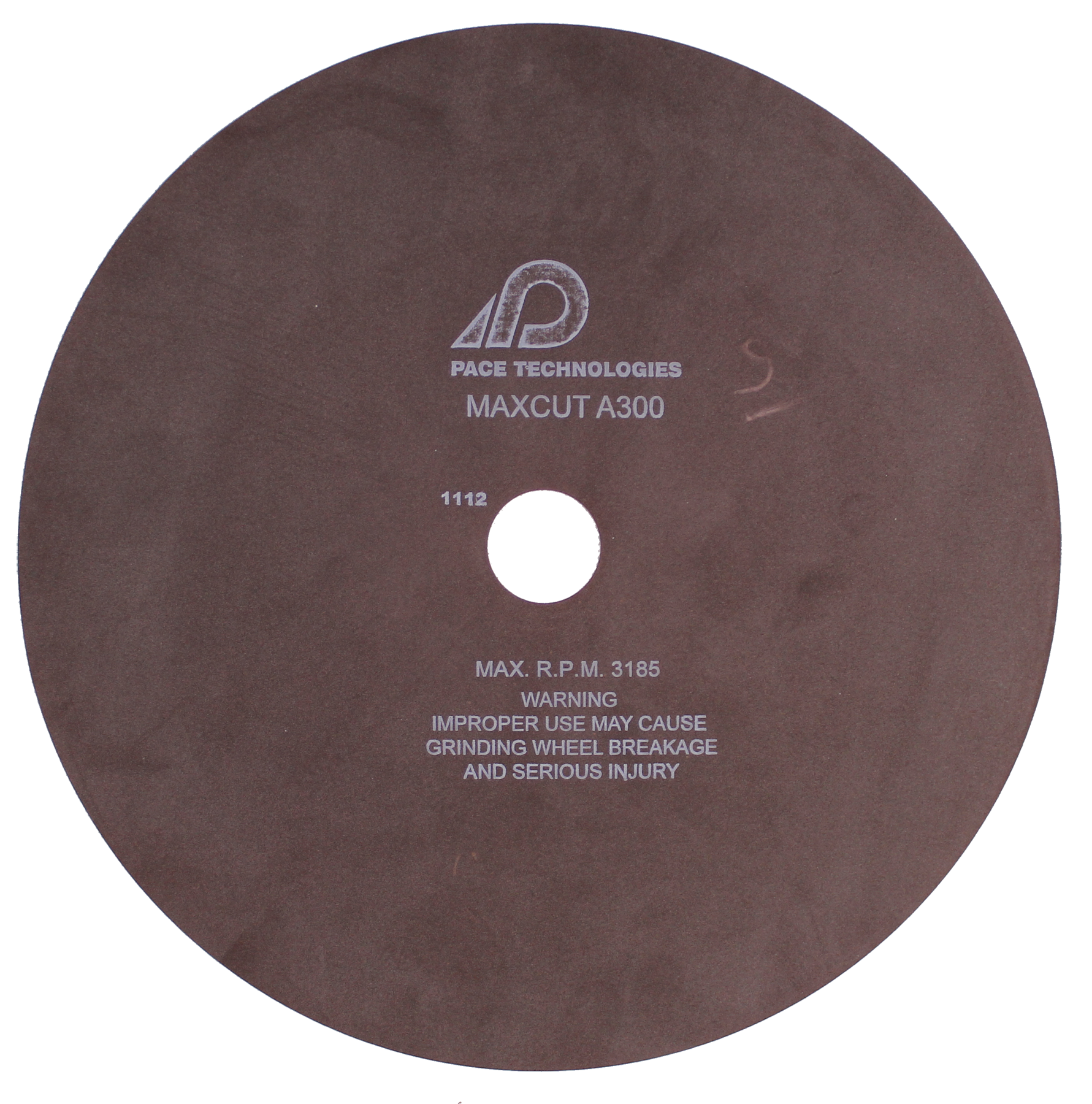
Soft non-ferrous metals (aluminum, brass, zinc, etc.) Alumina/resin bonded MAX-E MAX-E Abrasive Blade
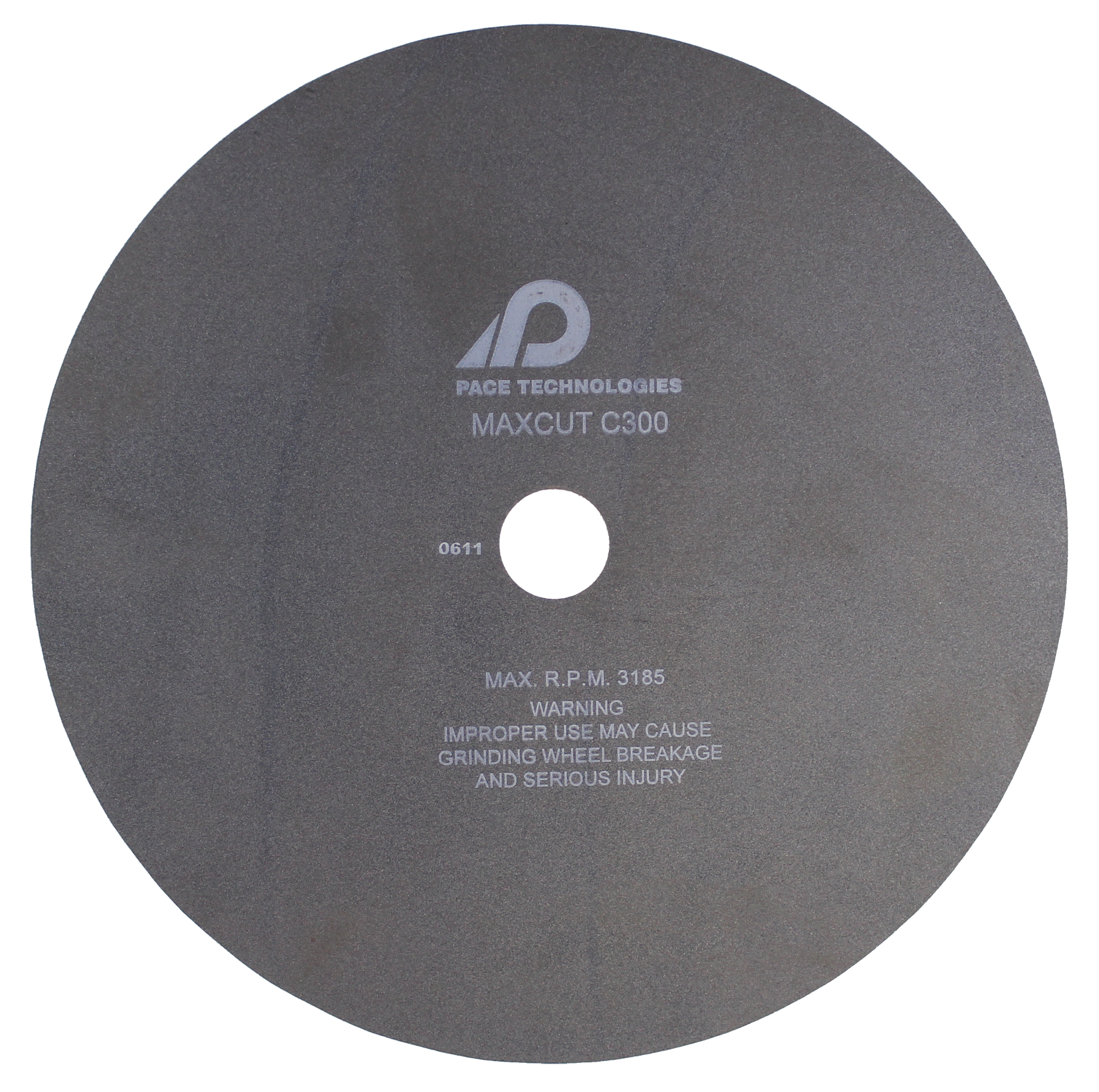
Hard non-ferrous metals (titanium, zirconium, etc.) Silicon carbide/resin-rubber bond MAX-C MAX-C Abrasive Blade
Soft steels Alumina/resin bonded MAX-E MAX-E Abrasive Blade
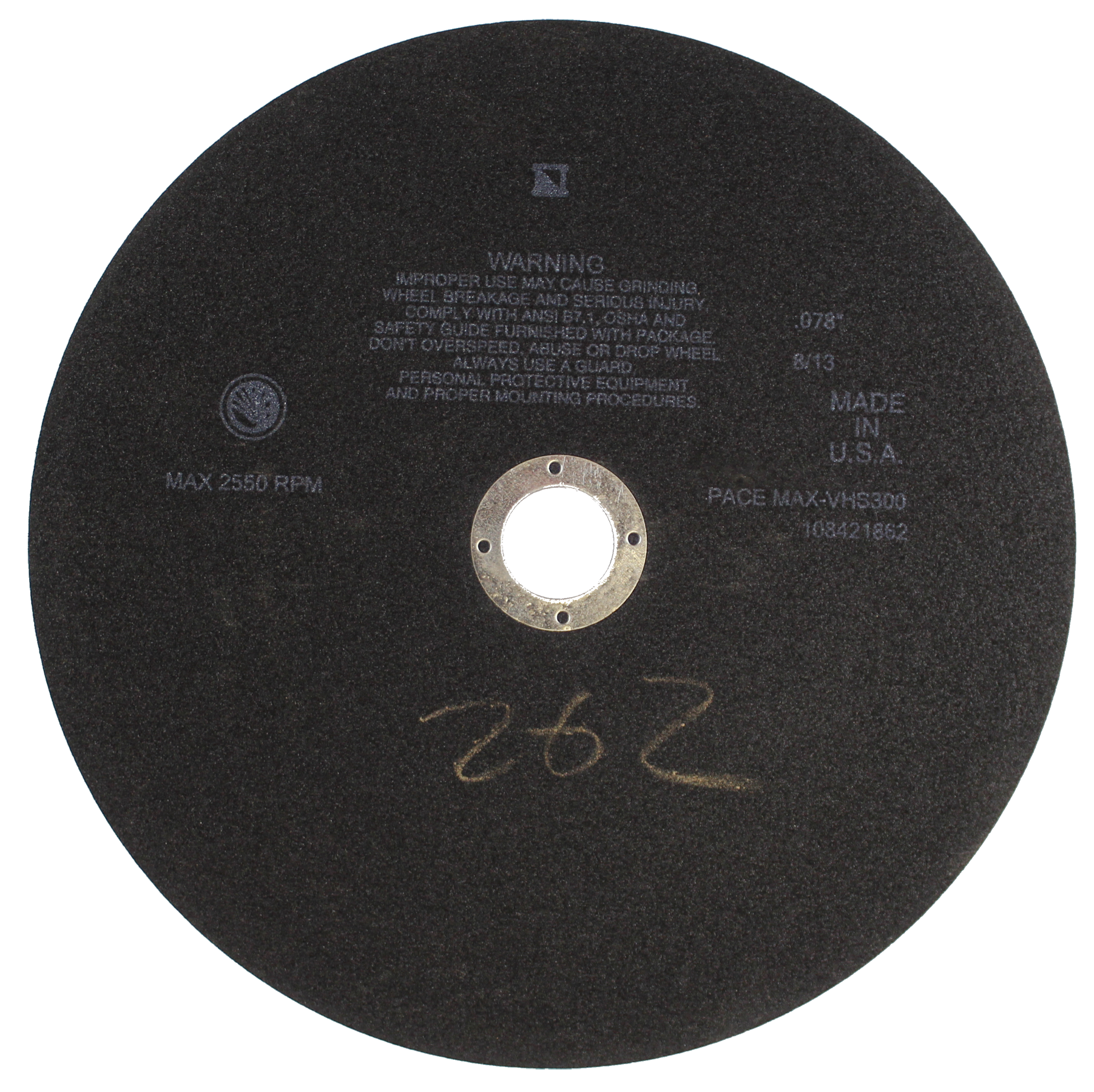
Hard and case hardened steels Alumina/resin bonded MAX-VHS MAX-VHS Abrasive Blade
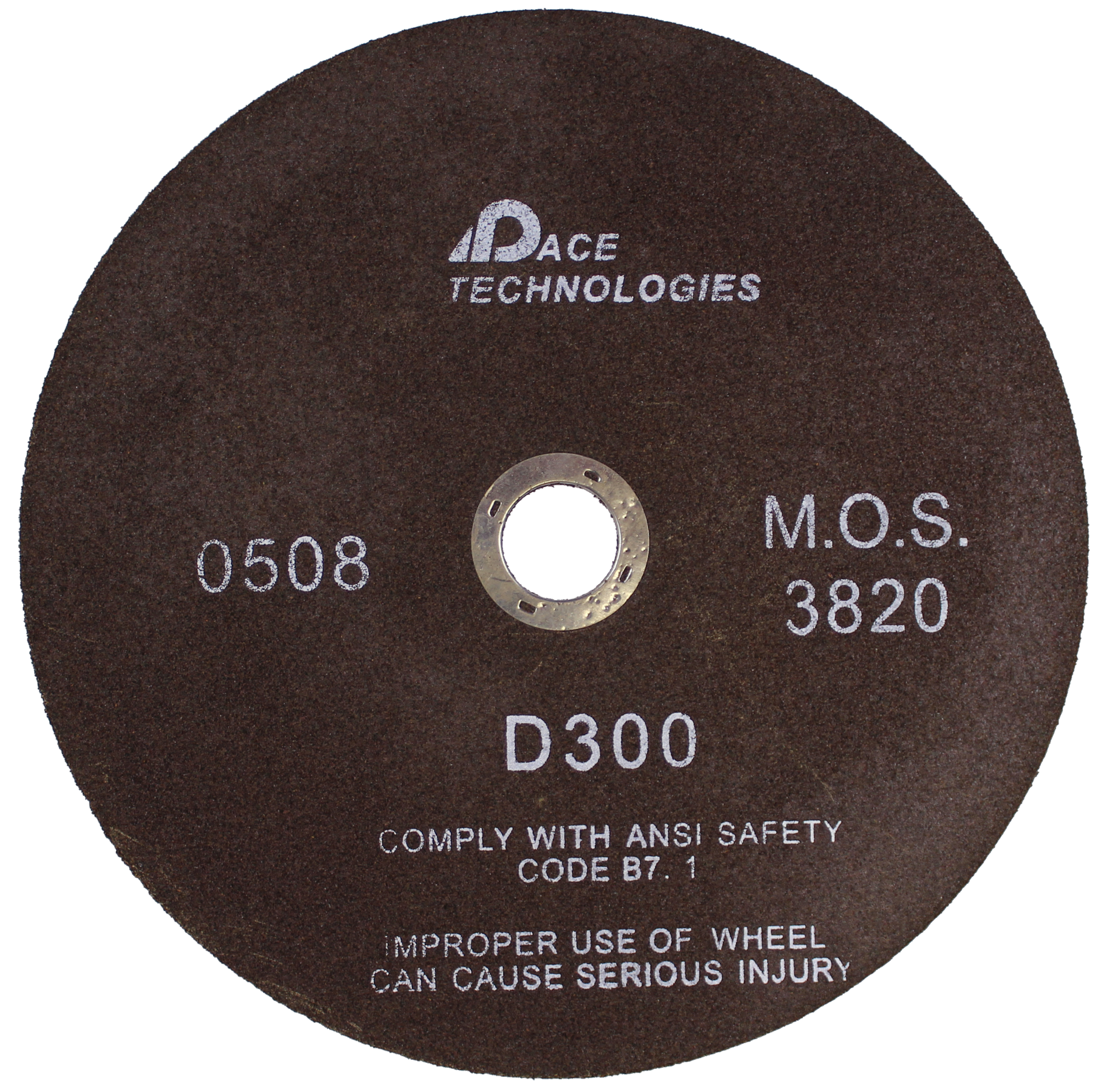
General purpose blade for steels and ferrous metals Alumina/resin bonded MAX-D MAX-D Abrasive Blade
Universal thin resin/rubber blade Alumina/resin-rubber bond MAX-A MAX-A Abrasive Blade
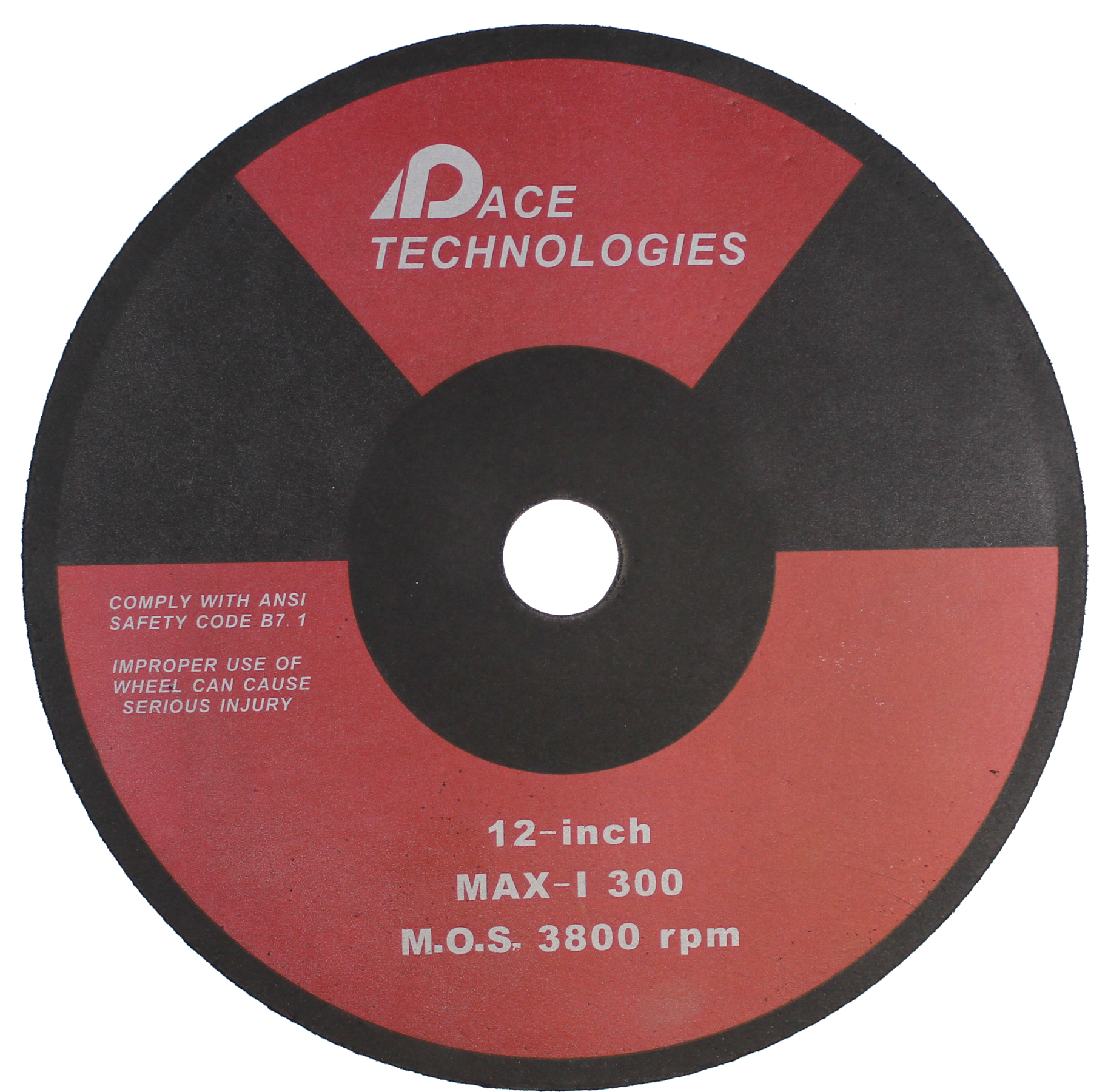
Industrial general purpose thin blade Alumina/resin-rubber bond MAX-I MAX-I Abrasive Blade

Part Numbers by Size

Material / Application 10-inch 12-inch 14-inch 16-inch
Soft non-ferrous (aluminum, brass, zinc) MAX-E250 MAX-E300 MAX-E350 MAX-E400
Hard non-ferrous (titanium, zirconium) MAX-C250 MAX-C300 MAX-C350 MAX-C400
Soft steels MAX-E250 MAX-E300 MAX-E350 MAX-E400
Hard and case-hardened steels MAX-VHS250 MAX-VHS300 MAX-VHS350 MAX-VHS400
General steels and ferrous metals MAX-D250T MAX-D300 MAX-D350 MAX-D400
Universal thin blade MAX-A250 MAX-A300 MAX-A350 MAX-A400
Industrial general purpose thin MAX-I250 MAX-I300 MAX-I350 MAX-I400

Blade Specifications

Blade Type Specification 10-inch 12-inch 14-inch 16-inch
MAX-A Thickness (in) 0.039 0.055 0.063 0.090
Max Speed (RPM) 3820 3185 2730 2860
MAX-C Thickness (in) 0.059 0.078 0.078 0.100
Max Speed (RPM) 3440 3185 3460 2390
MAX-D Thickness (in) 0.059 0.078 0.078 0.100
Max Speed (RPM) 4585 3820 3275 3800
MAX-E Thickness (in) 0.059 0.078 0.078 0.100
Max Speed (RPM) 4500 3800 3200 3800
MAX-I Thickness (in) 0.059 0.078 0.078 0.100
Max Speed (RPM) 4500 3800 3200 3800
MAX-VHS Thickness (in) 0.075 0.078 0.098 0.100
Max Speed (RPM) 3055 2500 2220 1925
DMAX Thickness (in) 0.059 0.060 0.060 0.075
Max Speed (RPM) 6100 5000 4350 3800
Shop Abrasive Blades

Abrasive Cutting Fluid

Lubrication and swarf removal during abrasive cutting are required to minimize damage to the specimen. The ideal cutting fluid removes cutting swarf and degraded abrasive blade material, and should have a relatively high flash point because of the sparks produced during abrasive sectioning. For some older abrasive cutters, the proper cutting fluid can also have the added benefit of coating cast iron bases and fixtures to reduce or eliminate corrosion.

TIP: Most abrasive cutters have a hood, which can produce a corrosive humidity chamber when not in use. To reduce these corrosive effects, keep the hood open when not in use.

Description Quantity Part No. Product
MAXCUT Cutting Fluid (32 oz) 32 oz MAXCUT-1000-32 MAXCUT Cutting Fluid (32 oz)
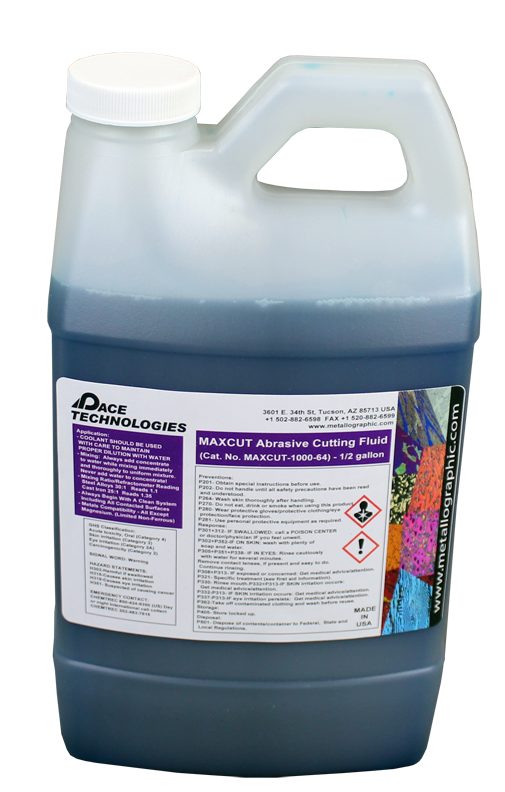
MAXCUT Cutting Fluid (1/2 gallon) 1/2 gallon MAXCUT-1000-64 MAXCUT Cutting Fluid (1/2 gallon)
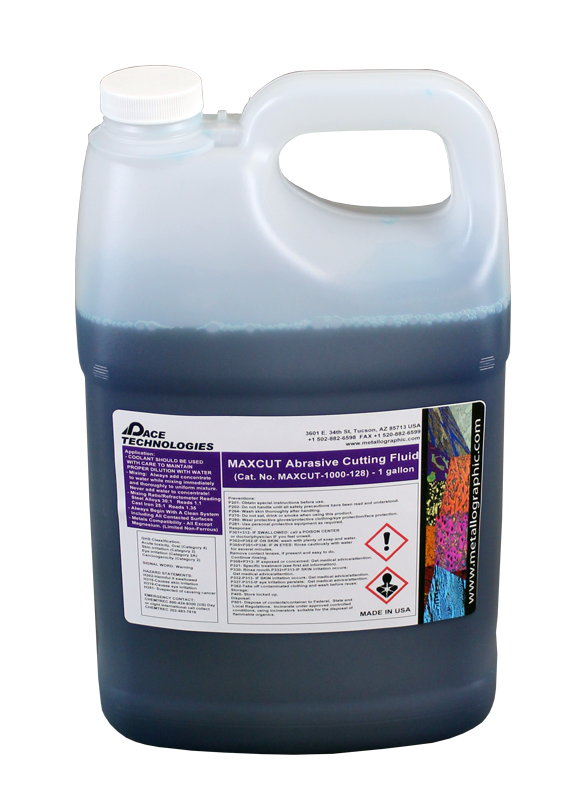
MAXCUT Cutting Fluid (1 gallon) 1 gallon MAXCUT-1000-128 MAXCUT Cutting Fluid (1 gallon)
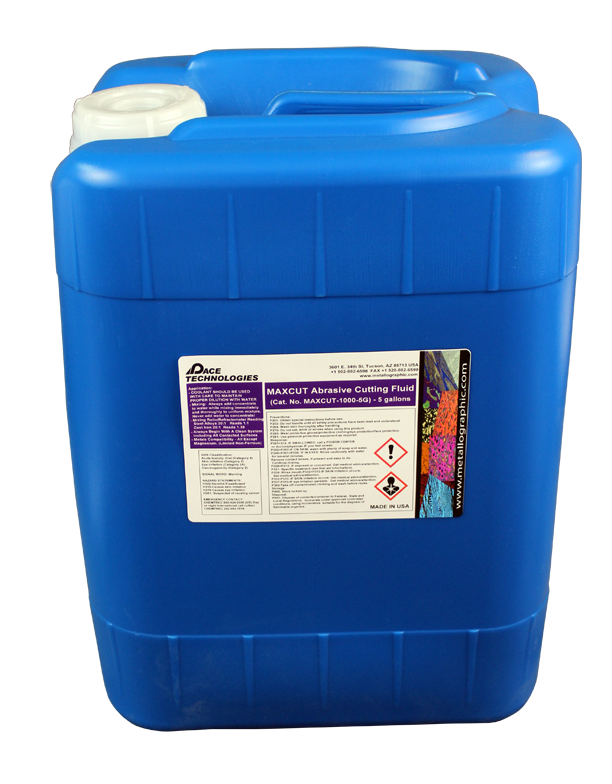
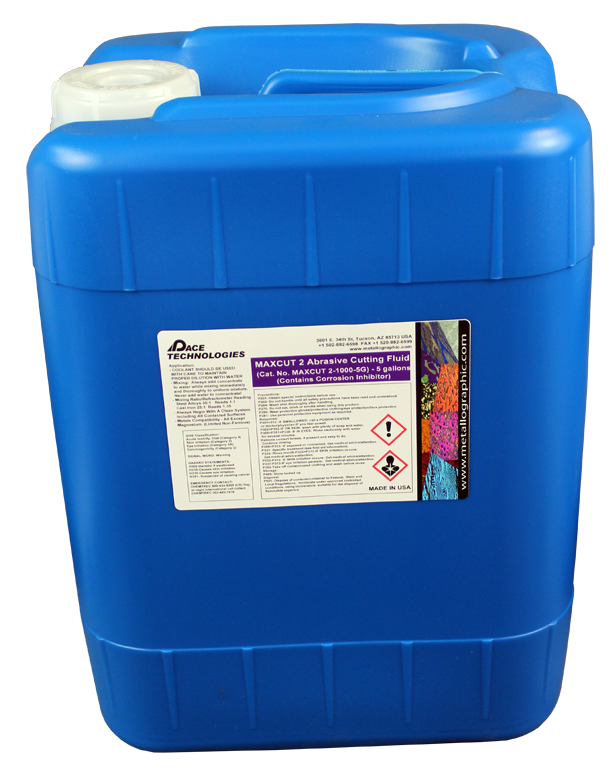
MAXCUT Cutting Fluid (5 gallons) 5 gallons MAXCUT-1000-5G MAXCUT Cutting Fluid (5 gallons)

Description Quantity Part No. Product
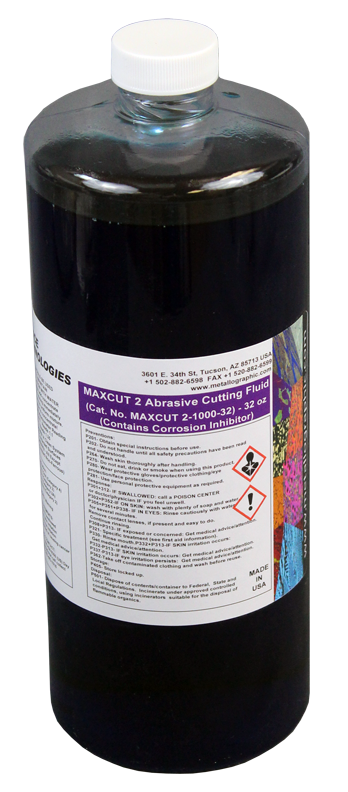
MAXCUT 2 Cutting Fluid (with corrosion inhibitor) (32 oz) 32 oz MAXCUT2-1000-32 MAXCUT 2 Cutting Fluid (32 oz)
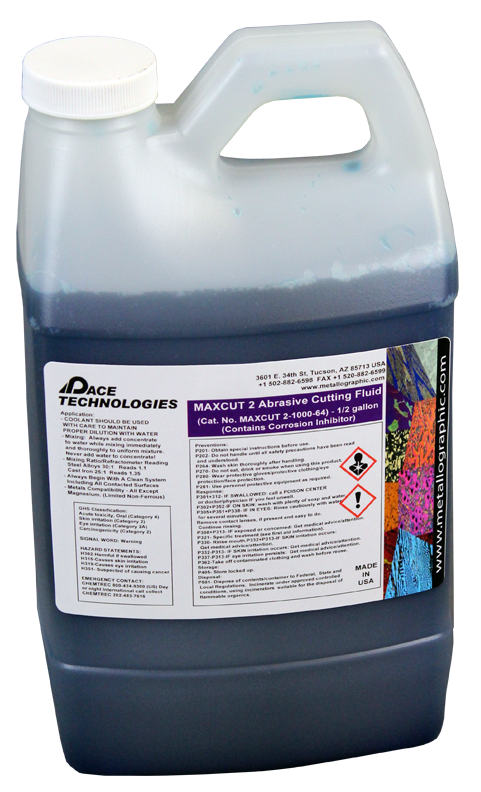
MAXCUT 2 Cutting Fluid (with corrosion inhibitor) (1/2 gallon) 1/2 gallon MAXCUT2-1000-64 MAXCUT 2 Cutting Fluid (1/2 gallon)
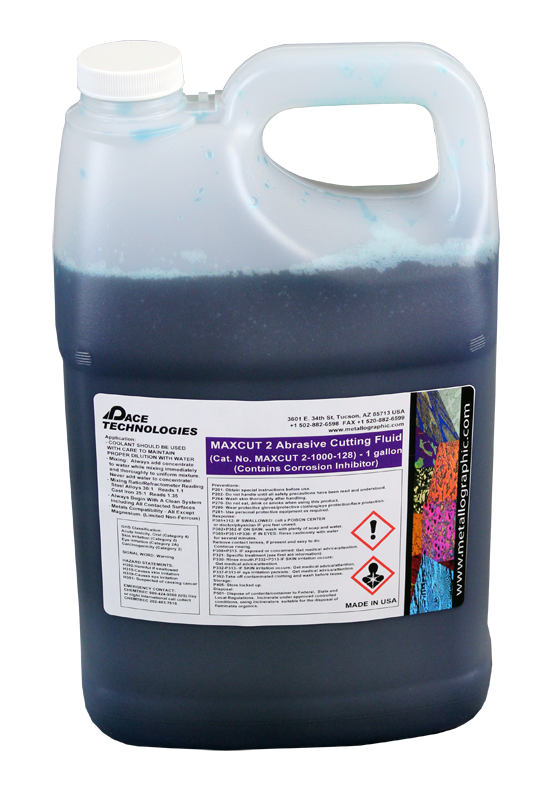
MAXCUT 2 Cutting Fluid (with corrosion inhibitor) (1 gallon) 1 gallon MAXCUT2-1000-128 MAXCUT 2 Cutting Fluid (1 gallon)
MAXCUT 2 Cutting Fluid (with corrosion inhibitor) (5 gallons) 5 gallons MAXCUT2-1000-5G MAXCUT 2 Cutting Fluid (5 gallons)

Description Quantity Part No. Product
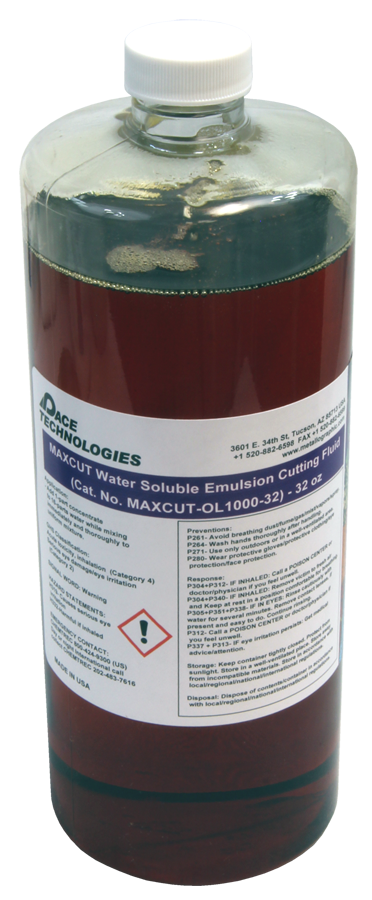
MAXCUT OL1000 Water Soluble Emulsion Cutting Fluid (32 oz) 32 oz MAXCUT-OL-1000-32 MAXCUT OL1000 Water Soluble Emulsion Cutting Fluid (32 oz)
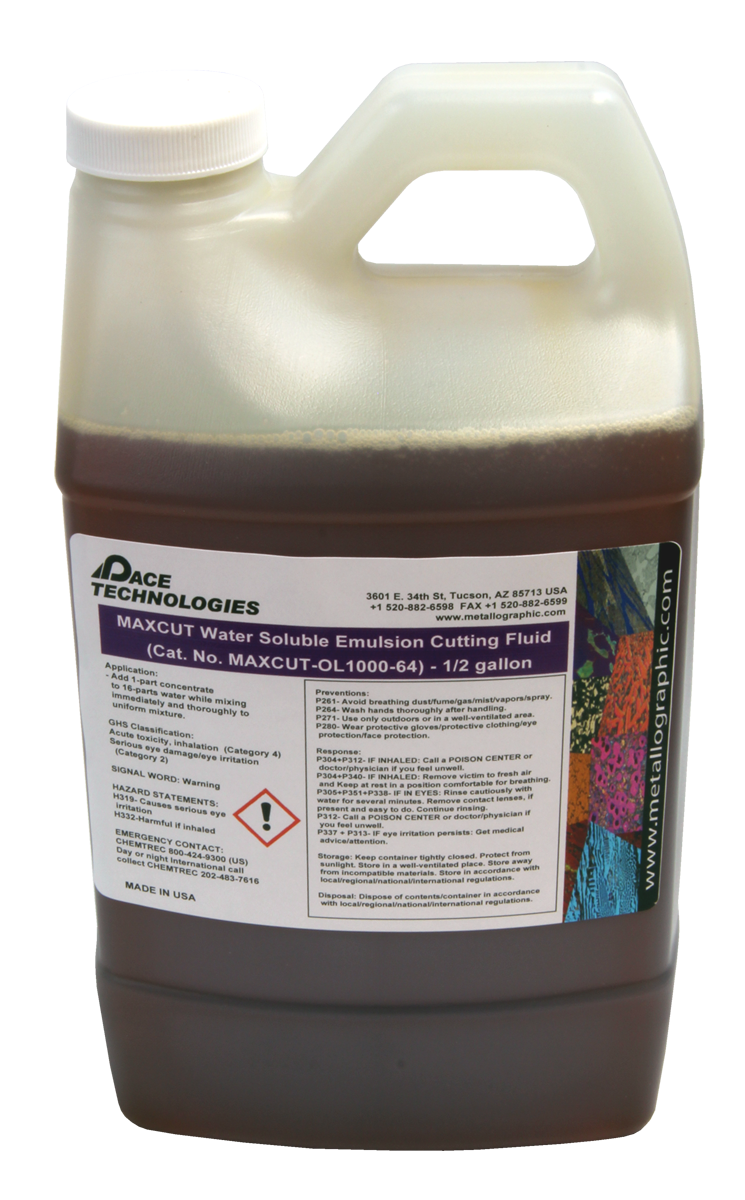
MAXCUT OL1000 Water Soluble Emulsion Cutting Fluid (1/2 gallon) 1/2 gallon MAXCUT-OL-1000-64 MAXCUT OL1000 Water Soluble Emulsion Cutting Fluid (1/2 gallon)
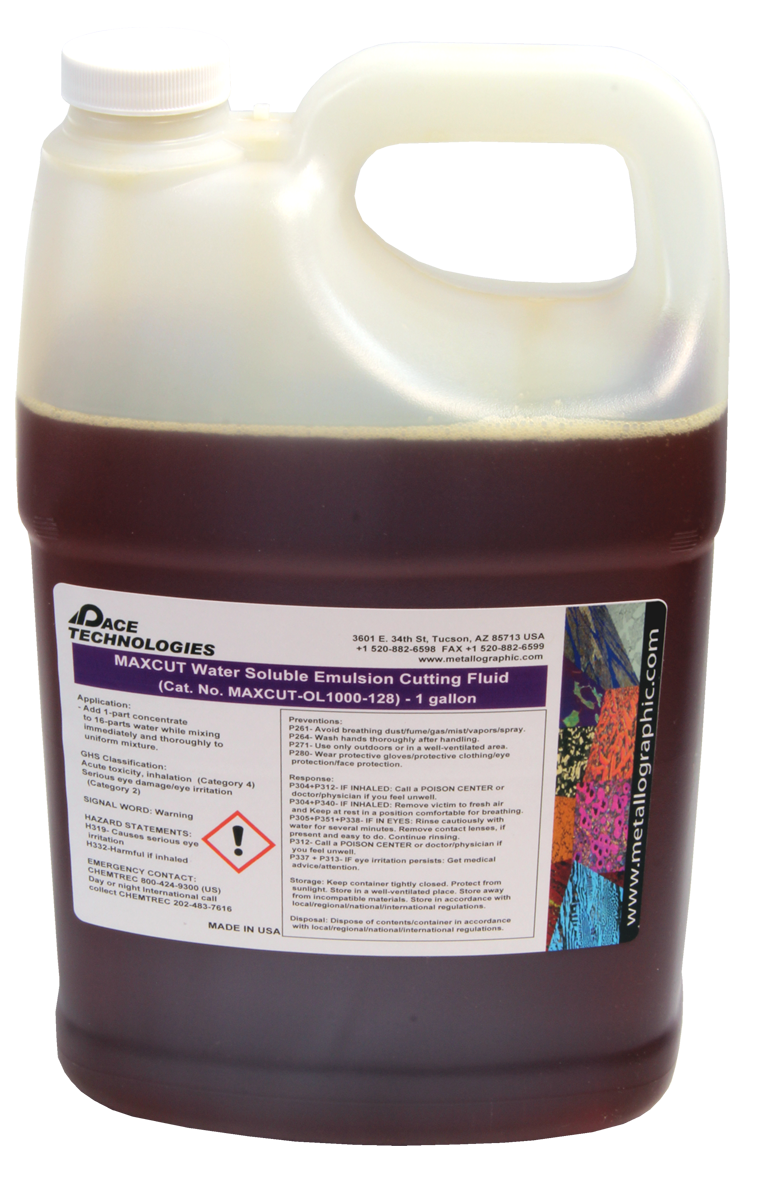
MAXCUT OL1000 Water Soluble Emulsion Cutting Fluid (1 gallon) 1 gallon MAXCUT-OL-1000-128 MAXCUT OL1000 Water Soluble Emulsion Cutting Fluid (1 gallon)
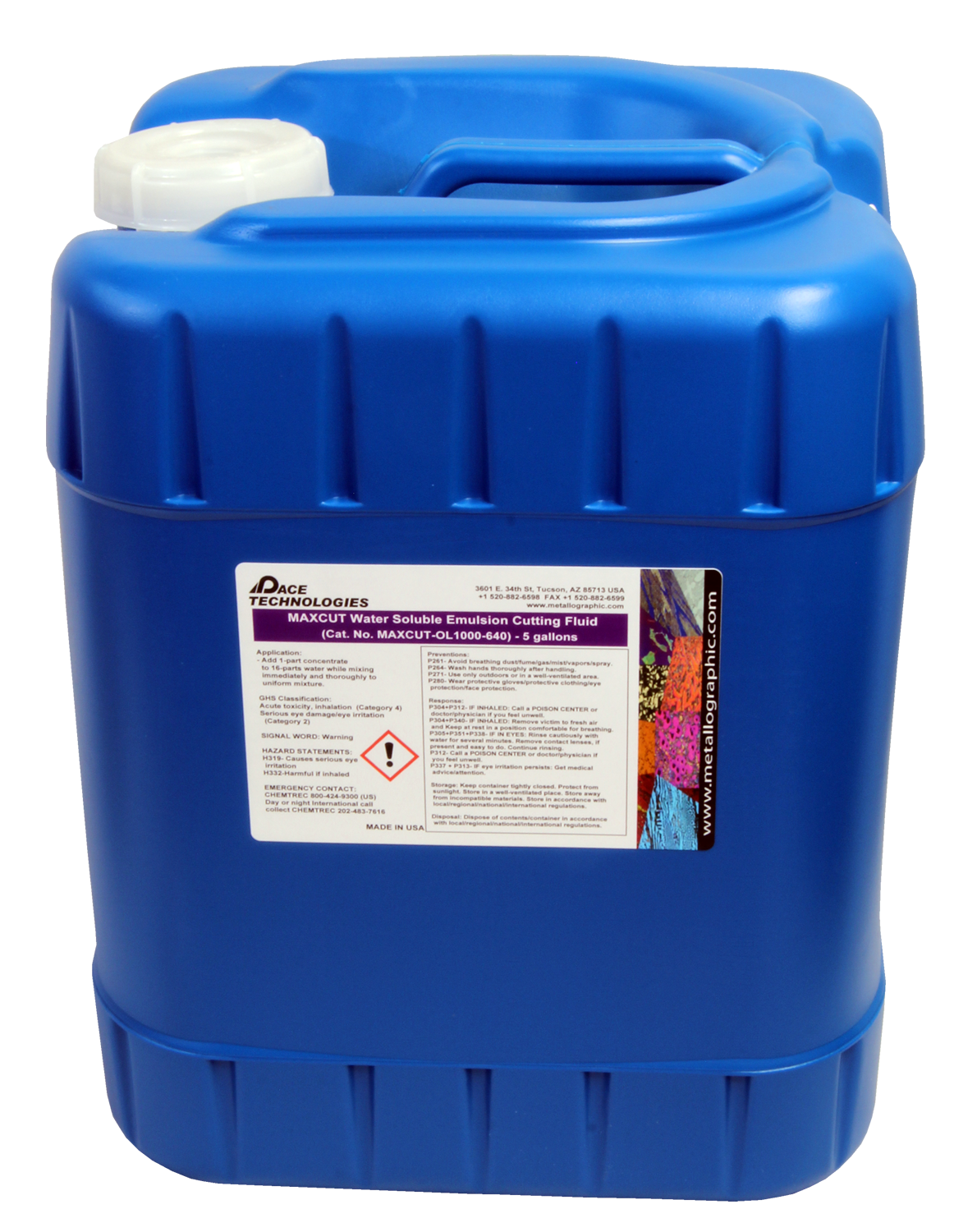
MAXCUT OL1000 Water Soluble Emulsion Cutting Fluid (5 gallons) 5 gallons MAXCUT-OL-1000-5G MAXCUT OL1000 Water Soluble Emulsion Cutting Fluid (5 gallons)
Shop Cutting Fluids

Cutting Process & Best Practices

Abrasive sectioning is ideal for cutting ductile materials like metals, composites, plastics, and rubbers. Success depends on understanding the relationship between abrasive type, bonding, specimen properties, and proper cutting technique.

Abrasive Types & Bonding

Modern blades use alumina (best for ferrous metals) or silicon carbide (ideal for nonferrous metals). The bonding material should break down at the same rate as the abrasive dulls to maintain cutting efficiency. The right resin system depends on the sample's hardness and wear characteristics.

Cutting Speed & Parameters

Variable speed saws enhance control by matching cutting speed to material hardness. Softer metals require slower speeds to minimize burrs, while harder materials benefit from higher speeds to expose sharp abrasives. For hardened steels, use 50% of the blade's maximum speed to avoid overheating.

Recommended Procedures

  • Choose the correct abrasive blade for the material.
  • Secure the specimen properly to prevent damage.
  • Maintain coolant levels and replace when dirty to manage debris from blade wear.
  • Adjust cutter speed based on material hardness (slower for softer metals, faster for harder samples).
  • Ensure the blade reaches full speed before cutting.
  • Use steady force or light pulsing to optimize cuts and preserve sample integrity.
  • When cutting coated materials, position the specimen to cut into the coating and exit through the base material to keep the coating in compression.

Abrasive Sectioning Troubleshooting

Symptom Cause Action
Chipped or broken blade Secure sample properly Reduce cutting force Secure sample properly Reduce cutting force
Bluish burnt color on specimen Incorrect cutting fluid Improper blade or excessive force Use proper cutting fluid Consult applications guideline or use a blade with a softer resin

Related Equipment

Manual Abrasive Cutter

Manual Abrasive Cutters

Our MEGA manual abrasive cutters provide precision cutting for metallographic sample preparation. Available in multiple sizes (10" to 16" blade capacity) with features like variable speed control, coolant systems, and robust construction for reliable operation.

Automated Abrasive Cutter

Automated Abrasive Cutters

MEGA automated abrasive cutters offer programmable cutting cycles, automatic feed control, and advanced safety features. Perfect for high-volume labs requiring consistent, repeatable cuts with minimal operator intervention.

Frequently Asked Questions

Common questions about abrasive cutting and blade selection

How do I select the right abrasive cutting blade for my material?

Blade selection depends on your material's hardness and composition. For soft non-ferrous materials like aluminum and brass, use harder bonding materials. For harder materials like steel and ceramics, use softer bonding to allow for self-sharpening. Refer to our blade selection guide on this page for detailed recommendations by material type, or contact our applications team for personalized assistance.

What factors affect abrasive blade life and performance?

Blade life is influenced by several factors: proper blade selection for the material, appropriate cutting speed and feed rate, adequate coolant flow, correct specimen clamping, and blade storage conditions. Using too much force, incorrect coolant, or cutting at excessive speeds can significantly reduce blade life. Follow our recommended procedures section for optimal cutting parameters.

What type of coolant should I use for abrasive cutting?

The choice of coolant depends on your material and application. Soluble oils provide good cooling and lubrication for most metals. For materials sensitive to water, use petroleum-based fluids. For non-ferrous metals prone to staining, specialized coolants may be required. Our cutting fluids section provides detailed recommendations. Proper coolant flow is essential to prevent heat buildup and blade wear.

What cutting speed and feed rate should I use?

Cutting parameters vary by material and blade size. As a general rule, harder materials require slower speeds and lighter feed rates, while softer materials can handle higher speeds. Never exceed the maximum operating speed marked on the blade. Start with conservative parameters and adjust based on cut quality and blade wear. Our recommended procedures section provides specific guidelines for common materials.

How can I prevent edge retention issues and specimen damage?

Edge retention and minimal damage require proper technique. Always secure specimens firmly to prevent movement. Use adequate coolant to minimize heat generation. Select the appropriate blade for your material. Apply consistent, moderate cutting pressure rather than forcing the cut. For critical edge retention, consider using precision wafering blades with finer abrasives and resin-bonded construction.

What should I do if I see burning, discoloration, or poor cut quality?

Burning or discoloration indicates excessive heat, typically from inadequate coolant flow, incorrect blade selection, or too much cutting force. Check coolant levels and flow rate first. Verify you're using the correct blade for your material. Reduce feed rate and cutting force. For persistent issues, consult our troubleshooting guide on this page or contact our technical support team for assistance.

Shop Online