Precision Wafering Consumables

Our precision wafering consumables deliver clean, accurate cuts for delicate materials like semiconductors and ceramics. With diamond wafering blades and specialized cutting fluids, they minimize damage and ensure consistent results for microstructural analysis.

Precision Wafering Consumables

Key Considerations

Choose the Right Blade

Select a diamond blade suited to the material's brittleness and thickness for precise, clean cuts.

Maintain Coolant Flow

Ensure proper coolant flow to minimize friction and heat, protecting delicate structures.

Adjust Cutting Speed

Use appropriate speeds: lower for fragile materials and higher for tougher ones.

Introduction

Precision wafer cutting is typically performed with diamond wafering blades, but for certain materials, cubic boron nitride (CBN) blades are more effective. Optimal wafer cutting requires selecting the right abrasive concentration, abrasive size, cutting speed, and load. Precision wafering is essential for delicate samples or precise sectioning, with saw speeds ranging from 50-1500 rpm or 300-3000 rpm. High-speed saws are preferred for hard materials like ceramics, heat-treated steels, and minerals.

The most critical parameter in precision wafering is the abrasive size. Finer abrasives result in less damage, making them ideal for extremely brittle materials like semiconductors and ceramics. Precision wafering saws are used for delicate samples requiring exact cuts, with factors like abrasive concentration, blade grit, and cutting speed all playing crucial roles in achieving optimal results with minimal surface damage.

Blade Selection Guide

Material Characteristic Speed (rpm) Load (grams) Blade (grit/conc.)
Silicon substrate Soft/Brittle <300 <100 Fine/Low
Gallium arsenide Soft/Brittle <200 <100 Fine/Low
Boron composites Very brittle 500 250 Fine/Low
Ceramic fiber composites Very brittle 1000 500 Fine/Low
Glasses Brittle 1000 500 Fine/Low
Minerals Friable/Brittle >1500 >500 Fine/Low
Alumina ceramic Hard/Tough >1500 >500 Medium/Low
Zirconia (PSZ) Hard/Tough >3500 >800 Medium/Low
Silicon nitride Hard/Tough >3500 >800 Medium/Low
Metal matrix composites -- >3500 >500 Medium/High
General purpose -- Variable Variable Medium/High

Recommended Procedures & Best Practices

  • Condition the wafering blade with the appropriate dressing stick to remove previous cutting swarf and smeared metal.
  • Clamp the specimen properly to prevent movement during cutting.
  • Use a rubber pad to absorb vibration when cutting brittle materials.
  • Start the cut with a lower load to set the blade.
  • Orient the specimen so that the cut is through the smallest cross-section.
  • Use the largest appropriate blade flanges to prevent blade distortion.
  • Reduce the load towards the end of the cut for brittle specimens to minimize fracturing.
  • Use the appropriate cutting fluid for the material.

Products

3-inch Diameter (76 mm) Wafering Blade, 1/2-inch (12.7 mm) Arbor

Application Conc. Diamond Size Thickness Catalog Number Product Images
Brittle materials (microelectronic materials, friable ceramics, minerals) Low Fine 0.006-inch WB-0030LC WB-0030LC Wafering Blade
Hard/tougher ceramics (Si3N4, ZrO2) Low Medium 0.006-inch WB-0035LC WB-0035LC Wafering Blade
Most metal samples High Medium 0.006-inch WB-0035HC WB-0035HC Wafering Blade
Shop 3-inch Blades

4-inch Diameter (102 mm) Wafering Blade, 1/2-inch (12.7 mm) Arbor

Application Conc. Diamond Size Thickness Catalog Number Product Images
Brittle materials (microelectronic materials, friable ceramics, minerals) Low Fine 0.012-inch WB-0040LC WB-0040LC Wafering Blade
Hard/tougher ceramics (Si3N4, ZrO2) Low Medium 0.012-inch WB-0045LC Wafering Blade
Most metal samples High Medium 0.012-inch WB-0045HC Wafering Blade
Shop 4-inch Blades

5-inch Diameter (127 mm) Wafering Blade, 1/2-inch (12.7 mm) Arbor

Application Conc. Diamond Size Thickness Catalog Number Product Images
Brittle materials (microelectronic materials, friable ceramics, minerals) Low Fine 0.015-inch WB-0050LC Wafering Blade
Hard/tougher ceramics (Si3N4, ZrO2) Low Medium 0.015-inch WB-0055LC Wafering Blade
Most metal samples High Medium 0.015-inch WB-0055HC Wafering Blade
Shop 5-inch Blades

6-inch Diameter (153 mm) Wafering Blade, 1/2-inch (12.7 mm) Arbor

Application Conc. Diamond Size Thickness Catalog Number Product Images
Brittle materials (microelectronic materials, friable ceramics, minerals) Low Fine 0.018-inch WB-0060LC Wafering Blade
Hard/tougher ceramics (Si3N4, ZrO2) Low Medium 0.018-inch WB-0065LC Wafering Blade
Most metal samples High Medium 0.018-inch WB-0065HC Wafering Blade
Shop 6-inch Blades

7-inch Diameter (178 mm) Wafering Blade, 1/2-inch (12.7 mm) Arbor

Application Conc. Diamond Size Thickness Catalog Number Product Images
Brittle materials (microelectronic materials, friable ceramics, minerals) Low Fine 0.020-inch WB-0070LC Wafering Blade
Hard/tougher ceramics (Si3N4, ZrO2) Low Medium 0.020-inch WB-0075LC Wafering Blade
Most metal samples High Medium 0.020-inch WB-0075HC Wafering Blade
Shop 7-inch Blades

8-inch Diameter (203 mm) Wafering Blade, 1/2-inch (12.7 mm) Arbor

Application Conc. Diamond Size Thickness Catalog Number Product Images
Brittle materials (microelectronic materials, friable ceramics, minerals) Low Fine 0.024-inch WB-0080LC Wafering Blade
Hard/tougher ceramics (Si3N4, ZrO2) Low Medium 0.024-inch WB-0085LC Wafering Blade
Most metal samples High Medium 0.024-inch WB-0085HC Wafering Blade
Shop 8-inch Blades

Electroplated Wafering Blades, 1/2-inch (12.7 mm) Arbor

Application Conc. Diamond Size Thickness Catalog Number Product Images
4-inch electroplated diamond wafering blade (soft gummy materials such as plastics, rubber, and soft metals) Low Fine 0.030-inch WB-040EPD Wafering Blade
5-inch electroplated diamond wafering blade (soft gummy materials such as plastics, rubber, and soft metals) Low Medium 0.030-inch WB-050EPD Wafering Blade
6-inch electroplated diamond wafering blade (soft gummy materials such as plastics, rubber, and soft metals) High Medium 0.030-inch WB-060EPD Wafering Blade
7-inch electroplated diamond wafering blade (soft gummy materials such as plastics, rubber, and soft metals) High Medium 0.030-inch WB-070EPD Wafering Blade
8-inch electroplated diamond wafering blade (soft gummy materials such as plastics, rubber, and soft metals) High Medium 0.030-inch WB-080EPD Wafering Blade
Shop Electroplated Blades

CBN Wafering Blades, 1/2-inch (12.7 mm) Arbor

Application Conc. Diamond Size Thickness Catalog Number Product Images
4-inch CBN wafering blade (medium grit, high concentration) High Medium 0.012-inch WCBN-0045 Wafering Blade
5-inch CBN wafering blade (medium grit, high concentration) High Medium 0.015-inch WCBN-0055 Wafering Blade
6-inch CBN wafering blade (medium grit, high concentration) High Medium 0.018-inch WCBN-0065 Wafering Blade
7-inch CBN wafering blade (medium grit, high concentration) High Medium 0.020-inch WCBN-0075 Wafering Blade
8-inch CBN wafering blade (medium grit, high concentration) High Medium 0.024-inch WCBN-0085 Wafering Blade
Shop CBN Blades

CBN/Diamond Hybrid Wafering Blades, 1/2-inch (12.7 mm) Arbor

Application Conc. Diamond Size Thickness Catalog Number Product Images
4-inch CBN/Diamond Hybrid Wafering Blade (medium grit, high concentration) High Medium 0.012-inch WCBND-0045 Wafering Blade
5-inch CBN/Diamond Hybrid Wafering Blade (medium grit, high concentration) High Medium 0.015-inch WCBND-0055 Wafering Blade
6-inch CBN/Diamond Hybrid Wafering Blade (medium grit, high concentration) High Medium 0.018-inch WCBND-0065 Wafering Blade
7-inch CBN/Diamond Hybrid Wafering Blade (medium grit, high concentration) High Medium 0.020-inch WCBND-0075 Wafering Blade
8-inch CBN/Diamond Hybrid Wafering Blade (medium grit, high concentration) High Medium 0.024-inch WCBND-0085 Wafering Blade
Shop CBN/Diamond Hybrid Blades

Cutting Fluid

Description Quantity Catalog Number Product Images
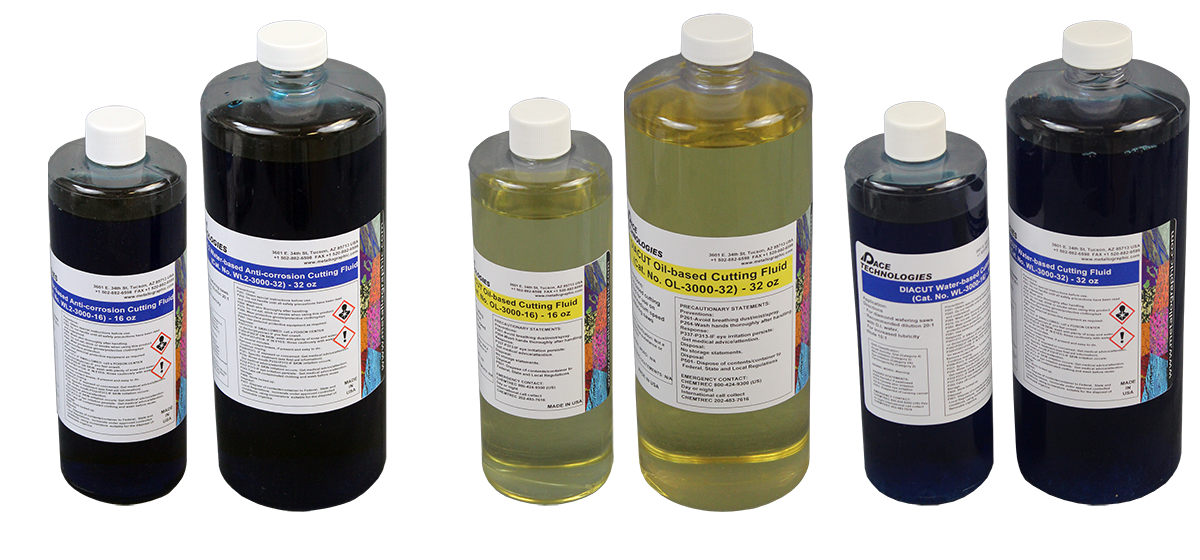
DIACUT™ Water-based wafer cutting fluid 16 oz (0.47l)
32 oz (0.94l)
WL-3000-16
WL-3000-32
Wafering Blade
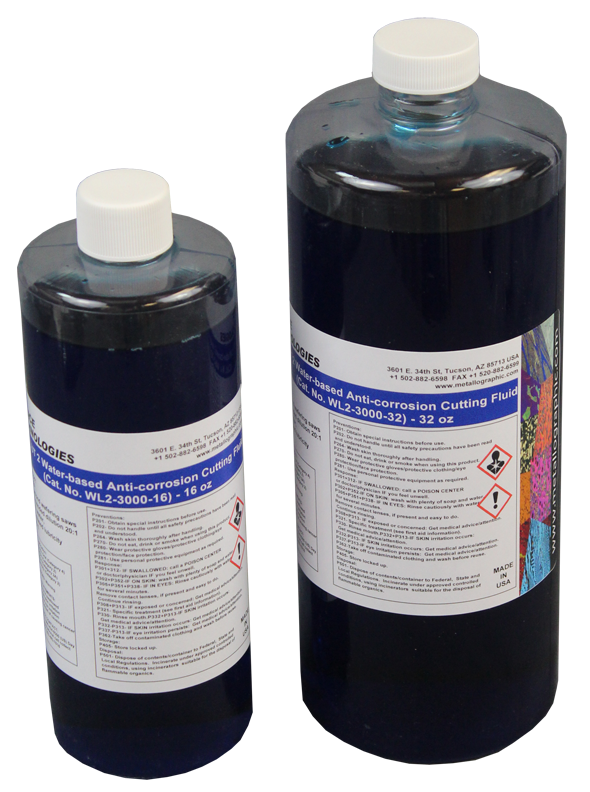
DIACUT™ 2 Water-based wafer cutting fluid with anti-corrosion additive 16 oz (0.47l)
32 oz (0.94l)
WL2-3000-16
WL2-3000-32
DIACUT 2 Cutting Fluid
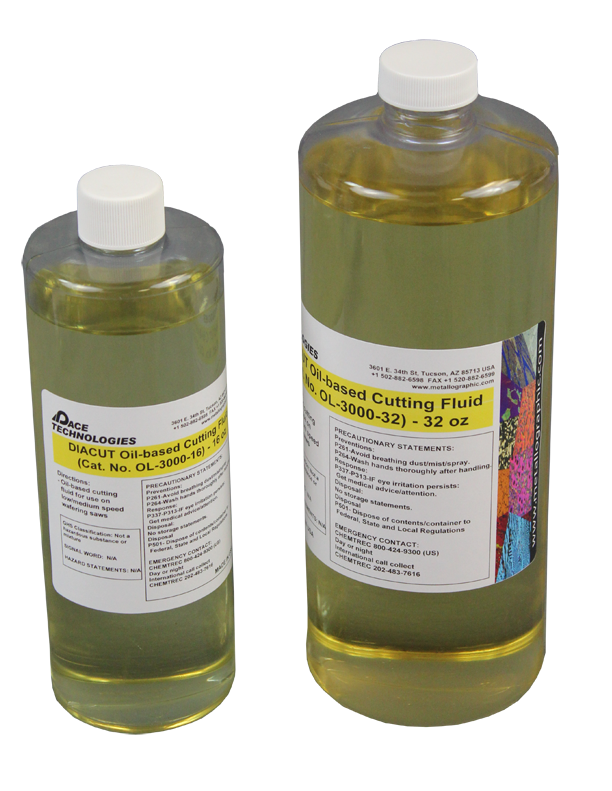
DIACUT™ Oil-based wafer cutting fluid 16 oz (0.47l)
32 oz (0.94l)
OL-3000-16
OL-3000-32
DIACUT Oil-based Cutting Fluid
Shop Cutting Fluids

Miscellaneous

Description Quantity Catalog Number
DIACUT Dressing sticks (medium grit) Each DRES-0010

Troubleshooting

Symptom Cause Action
Chipped or broken blade Improper blade dressing Insufficient clamping Too high initial load Use mechanical dressing fixture Secure specimen with rubber pad Reduce initial load
Excessive blade wobble Too high cutting load Reduce applied load Use larger diameter support flanges
Low cutting rates Smeared material on the blade Too low cutting speed/load Redress blade Increase cutting speed/load Rotate specimen to minimize cutting area
Excessive specimen damage or chipping Too large an abrasive Excessive vibration Use finer grit diamond blade Secure specimen with rubber mounting pad
Burr formation on specimen at end of cut Too high load/speed at end of cut Excessive vibration Reduce speed/load Secure specimen with rubber mounting pads

Related Equipment

PICO Precision Wafering Saw

PICO Precision Wafering Saws

PACE Technologies' PICO precision wafering saws deliver precise, low-damage cuts for metallographic analysis. Available in gravity feed and table feed models, these systems provide efficient sample preparation while preserving microstructural integrity for semiconductors, ceramics, and delicate materials.

Frequently Asked Questions

Common questions about precision wafering and blade selection

What is the difference between precision wafering and abrasive cutting?

Precision wafering uses thin diamond blades (0.012" to 0.024") at high speeds for low-deformation cuts on delicate materials like semiconductors and ceramics. Abrasive cutting uses thicker resin-bonded blades for general metallographic sectioning. Wafering minimizes surface damage and is ideal for heat-sensitive or brittle specimens requiring minimal material removal.

How do I select the right wafering blade for my material?

Blade selection depends on material brittleness and composition. For brittle materials like microelectronics and friable ceramics, use low concentration fine diamond blades. For harder, tougher ceramics (Si₃N₄, ZrO₂), use low concentration medium grit blades. For soft, gummy materials like plastics or rubber, electroplated diamond blades prevent loading. Consult our blade selection guide on this page or contact our applications team for specific recommendations.

What cutting fluid should I use for precision wafering?

We recommend DIACUT™ water-based wafering fluid for most applications. For materials prone to corrosion, use DIACUT™ 2 with anti-corrosion additives. Proper cutting fluid cools the blade, lubricates the cut, and flushes debris. Always maintain adequate fluid flow and replace when contaminated to ensure optimal blade performance and cut quality.

How can I extend the life of my precision wafering blades?

To maximize blade life: 1) Use appropriate cutting speeds (higher for soft materials, lower for hard/brittle ones), 2) Maintain consistent, adequate coolant flow, 3) Dress the blade periodically with DIACUT dressing sticks to expose fresh diamond, 4) Avoid excessive feed pressure, 5) Store blades properly when not in use, and 6) Ensure specimens are securely mounted to prevent vibration. Following recommended procedures for your material type will significantly extend blade life.

When should I use CBN or CBN/Diamond hybrid blades instead of standard diamond blades?

CBN (Cubic Boron Nitride) blades excel at cutting ferrous materials, hardened steels, and superalloys where diamond blades wear quickly due to chemical reactivity with iron. CBN/Diamond hybrid blades combine the benefits of both abrasives, offering versatility for mixed-material samples or applications requiring both hardness and thermal stability. Use high-concentration CBN blades for consistent, long-life performance on steel-based materials.

What causes chipping or cracking during precision wafering, and how can I prevent it?

Chipping and cracking typically result from excessive feed pressure, improper blade selection, insufficient coolant, or vibration from loose specimen mounting. To prevent damage: reduce feed rate for brittle materials, select finer grit blades with lower concentration, ensure adequate coolant flow, secure specimens firmly, and use lower cutting speeds for fragile samples. Refer to our troubleshooting section for specific solutions to common cutting problems.

Shop Online